

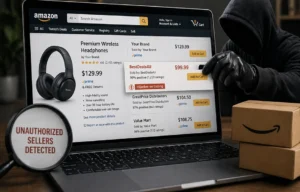
When most brands think of Amazon “hijackers,” they imagine counterfeiters flooding their listings with fake goods. But the reality is often more nuanced—and, for many brands, even more frustrating. In today’s marketplace, the majority of hijackers aren’t selling fakes—they’re reselling your authentic product, using loopholes in distribution or exploiting weaknesses in your supply chain. This is the gray market in action, and it can be as damaging as any counterfeiter. For a full breakdown of how hijacking works, see our pillar guide on how to deal with an Amazon hijacker.
What Is a Non-Counterfeit Amazon Hijacker?
An Amazon hijacker is any seller who attaches themselves to your product listing without your authorization. They may use the same ASIN and offer the genuine item—often at a lower price or with different fulfillment terms. This is sometimes referred to as piggybacking. Unlike counterfeiters, these hijackers are operating in a legal gray area. They have acquired your real product, but have no relationship with your brand, no obligation to follow your policies, and no investment in the customer experience. If you’re seeing this behavior, it often overlaps with Amazon seller piggybacking or cases where hijackers sell authentic product.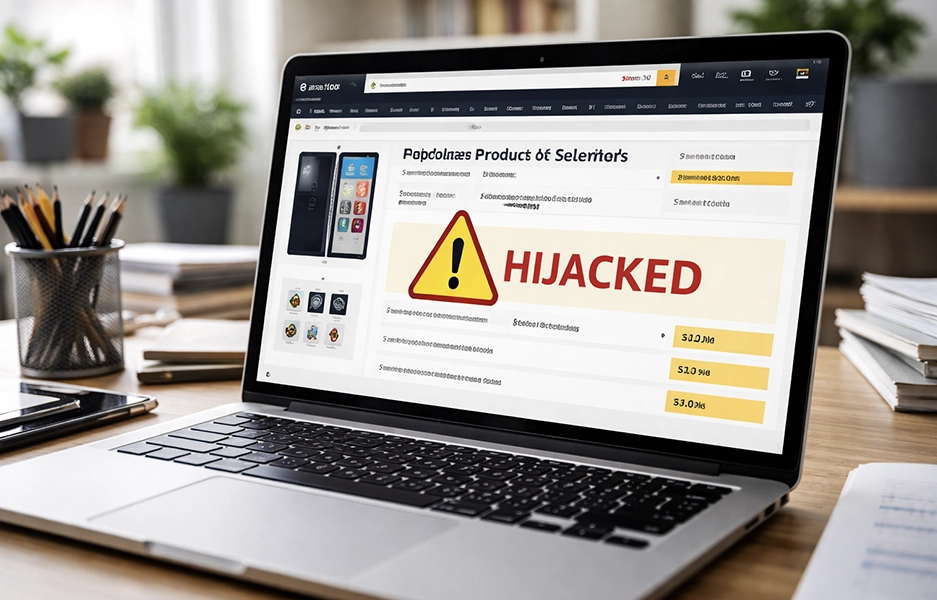
How Do These Sellers Get Real Inventory?
1. Gray Market Diversion
Many non-counterfeit hijackers acquire products through gray market channels. These are goods intended for one market, retailer, or geography that are diverted and resold in the U.S. on Amazon. They might be sourced from:- Distributors with weak controls who oversell inventory
- Retailers offloading overstock or promotional goods
- International supply chains with price gaps and limited oversight
2. Liquidation and Overstock
Failed promotions, store closures, and excess distributor inventory often end up with liquidators. Savvy hijackers buy these goods in bulk, then piggyback your listing to sell them as “new” on Amazon—even if the product is outdated or the packaging has changed. Many brands first uncover this issue when analyzing how pallets end up on Amazon.3. Retail Arbitrage
Some sellers specialize in buying discounted products during sales, using coupons or stacking deals, and reselling them on Amazon. While the product is real, it’s often not intended for e-commerce channels and may not meet your brand’s standards.4. “Leaky” Authorized Partners
Even trusted distributors or retailers can become inadvertent sources of unauthorized inventory, either by failing to vet their own buyers or by selling off excess stock on the side. In these cases, brands often need to investigate which distributors are selling on Amazon and implement stronger controls through a distribution control strategy.Why Are Non-Counterfeit Hijackers a Problem?
Even though the product is real, the risks to your brand are significant:- Buy Box Loss and Price Erosion: Non-counterfeit hijackers often ignore your MAP policy. By undercutting the price, they win the Buy Box, causing sales and profits to plummet. Many brands rely on Amazon MAP monitoring to detect these violations early.
- Inconsistent Customer Experience: These sellers may not offer the same shipping speeds, return policies, or customer support as your official channel.
- Channel Conflict: Your authorized retailers and distributors quickly become frustrated if they see their investment undermined by hijackers selling at lower prices online.
- Data Chaos: Unpredictable pricing and unauthorized inventory disrupt your sales forecasting, channel planning, and marketing initiatives.
Why Doesn’t Amazon Remove Them?
The short answer: the law protects them. Under the First Sale Doctrine, anyone who legally purchases a product can resell it—even on Amazon. Unless the item is counterfeit, materially different (such as lacking warranty coverage or proper packaging), or violating a trademark, Amazon does not remove these sellers by default. This is why brands often find themselves in situations where the listing is hijacked but the product is real.How Brand Alignment Helps Brands Respond
At Brand Alignment, our approach is built on real-world investigation, proactive enforcement, and strategic prevention—not empty promises.1. Comprehensive Monitoring
We use advanced software to monitor every seller on your listings, track Buy Box changes, and flag MAP violations in real time. For brands operating globally, our global Amazon price monitoring service provides full visibility across marketplaces.2. Supply Chain Forensics
By conducting test buys, analyzing serial numbers, and tracking lot codes, we help brands trace the source of unauthorized inventory—even when sellers attempt to hide behind shell companies or PO boxes.3. Targeted Enforcement
We deploy structured cease & desist campaigns, escalating to legal action or Brand Registry takedowns when there is evidence of trademark abuse or products being “materially different.” We customize our approach for every brand and seller type for maximum effectiveness.4. Channel Discipline & Prevention
Our team helps you lock down your supply chain, implement robust “Do Not Sell” lists, and require regular reporting from partners. By closing the loopholes, you reduce future hijacking risk. If you’re still evaluating tactics, see our guide on how to stop piggyback sellers.Case Study: Turning Chaos Into Control
A major consumer brand, overwhelmed by non-counterfeit hijackers, turned to Brand Alignment. Through proactive monitoring, deep-dive investigations, and aggressive enforcement, they achieved:- Buy Box control over 90%
- Revenue increase of +190%
- Total ROI exceeding 20,000% in just 18 months
Final Word
Non-counterfeit hijackers are just as dangerous as counterfeiters. They sap your sales, damage your pricing power, and erode trust in your channel. But with the right data, strategy, and enforcement, your brand can take back control—no matter how entrenched the problem. Want to learn how Brand Alignment recovers lost Buy Box share—even when hijackers are selling the real thing? Contact our team here.Take control of your marketplace presence with fast, effective brand protection strategies.
Every day, unauthorized sellers and MAP violations can erode your pricing, reputation, and revenue. Don’t wait for problems to escalate, start enforcing your policies and reclaim your market authority with our proven tools and expert support.
 Brand Alignment