

Table of Contents
A Brand Owner’s Guide to Tracing Hidden Marketplace Diversion
For many brand owners, discovering that their own distributors or wholesale accounts are secretly selling products on Amazon—or leaking inventory to unknown third-party sellers—is an all-too-common and costly challenge. These “shadow sellers” often operate through alternate business names, shell companies, or intermediaries. The result is the same: price erosion, MAP violations, Buy Box instability, and growing tension with authorized retail partners. In many cases, this problem emerges when brands lack a structured Amazon brand protection strategy that combines monitoring, supply chain control, and enforcement.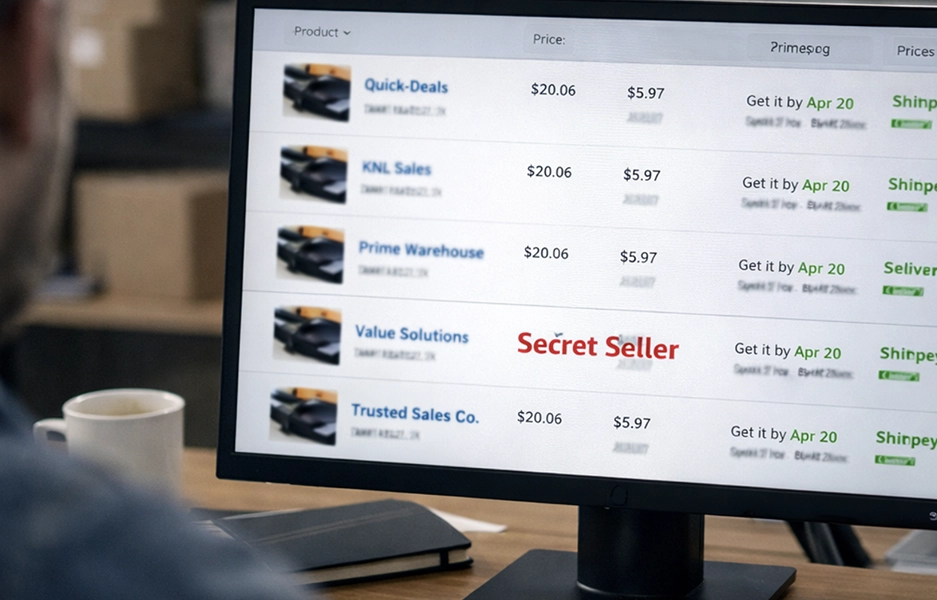
Why Do Distributors Sell on Amazon Secretly?
Profit Opportunity. Some partners discover they can generate higher margins selling directly on Amazon rather than through traditional channels.
Weak Monitoring or Enforcement. When brands do not actively monitor the marketplace, distributors may assume unauthorized selling will go unnoticed. This is why many companies implement global Amazon price monitoring to detect suspicious activity early.
Indirect Diversion. Some distributors avoid selling directly and instead offload inventory to jobbers or liquidators, which later supply gray market sellers online. Understanding where sellers get grey market products can often reveal how inventory is leaking into Amazon.
The Risks of Secret Account Selling
MAP Erosion. Hidden sellers frequently undercut pricing guidelines, harming both margins and brand perception. Many brands address this by implementing Amazon MAP monitoring to detect violations quickly.
Channel Friction. Authorized retailers may lose confidence in the brand if unauthorized sellers constantly undercut them online.
Brand Reputation Damage. Products shipped by unknown sellers may arrive damaged, expired, or poorly packaged, leading to negative reviews that reflect on the brand itself.
Loss of Channel Trust. Once marketplace leakage spreads, it becomes increasingly difficult to enforce agreements with compliant partners.
How to Detect Which Distributors Are Selling on Amazon
1. Marketplace Monitoring Software
Modern monitoring tools do more than track pricing. They detect seller activity patterns across marketplaces, including sudden price drops, new seller entries, and changes in Buy Box ownership.
This type of visibility helps brands identify potential inventory leaks and cross-reference sellers against their distributor list. Many companies pair monitoring with tools like Amazon Buy Box analytics to understand how unauthorized sellers impact listing performance.
Understanding how the Amazon Buy Box works is especially important here, since unauthorized sellers often win the Buy Box by aggressively lowering prices.
2. OSINT (Open Source Intelligence) Investigation
OSINT involves using publicly available information to uncover the real identity behind suspicious seller accounts.
Investigators may examine business registrations, LinkedIn profiles, domain ownership records, websites, or social media accounts to identify connections between seller aliases and known distributors.
Combined with monitoring data, these techniques can reveal the true identity behind a “mystery” seller account with surprisingly high accuracy.
3. Strategic Test Buys & Serial Number Tracing
Test buys remain one of the most effective investigative tools.
When brands purchase products from suspicious sellers, they can examine serial numbers, batch codes, packaging details, or shipping labels to trace inventory back to its original source.
Return addresses from FBM shipments can also reveal physical locations linked to distributors or warehouse operators.
4. Audit Sales & Shipping Patterns
Internal order history can often reveal unusual patterns that indicate inventory diversion.
Examples include large orders from accounts that historically purchased small quantities, shipments routed near Amazon fulfillment centers, or geographic clusters associated with known resellers.
Brands that struggle to trace these patterns often begin by investigating which distributor is selling on Amazon to narrow down potential sources.
5. Require Distributor Reporting
Requiring regular inventory and sell-through reporting from distributors creates accountability and documentation.
This paper trail makes it harder for accounts to quietly divert inventory into unauthorized online channels.
What to Do When You Find the Leaker
Document Everything. Save screenshots, serial numbers, order records, and shipping details that connect the seller to a distributor.
Direct Confrontation. Present the evidence and explain the violation of your online sales policies.
Cease & Desist Letters. Structured C&D letters are often the first formal enforcement step when unauthorized marketplace selling is confirmed.
Update Agreements. Strengthen contracts to clearly prohibit unauthorized online sales and establish stronger audit rights.
In severe cases, brands may also need structured programs to remove unauthorized sellers on Amazon and stabilize their distribution network.
Best Practices to Prevent Future Secret Selling
Clear Online Sales Policies. Make expectations and consequences explicit for every distributor.
Continuous Monitoring. Ongoing marketplace monitoring ensures inventory leaks are detected before they spread.
Random Audits and Test Buys. Routine verification discourages distributors from attempting unauthorized sales.
Reward Compliance. Many brands strengthen relationships with partners who consistently respect their online sales policies.
Final Thoughts
Unmasking secret Amazon sellers requires a combination of technology, investigation, and disciplined channel management. Brands that succeed combine marketplace monitoring, OSINT investigation, and strong distribution controls to stop inventory leaks and restore marketplace stability.
If your brand is struggling to identify who is behind unauthorized listings, solutions like Amazon MAP enforcement and structured marketplace investigations can help restore control of your channel.
Need help identifying and shutting down secret Amazon sellers? Contact us, Brand Alignment specializes in this kind of marketplace forensics and enforcement.



 Brand Alignment