

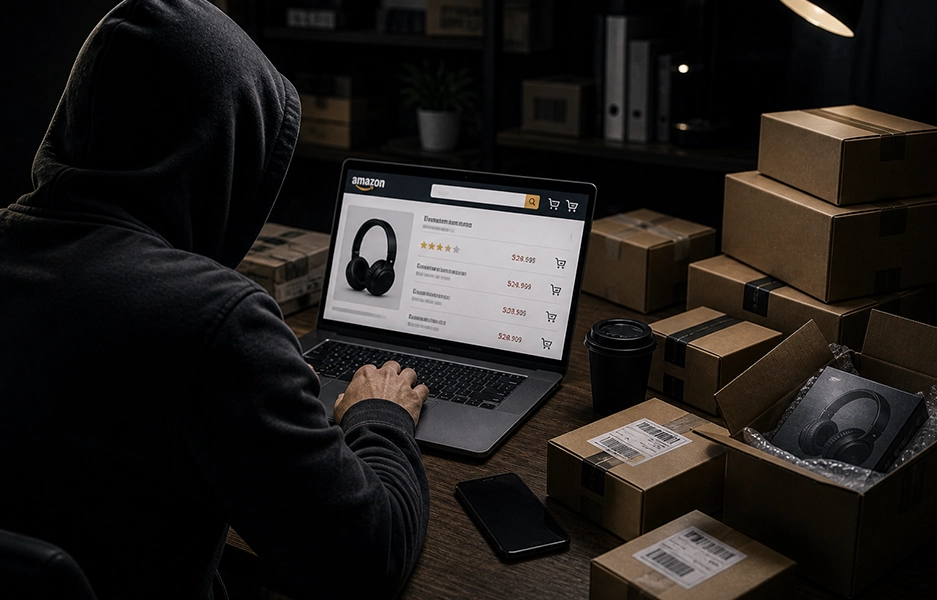
Unauthorized sellers are third-party merchants who sell branded products without permission from the brand or its authorized distribution network.
They often source inventory through grey market channels, liquidation, arbitrage, distributor leakage, or other unauthorized paths, then sell on marketplaces like Amazon, Walmart, or eBay.
While the products may be genuine, unauthorized sellers operate outside of brand-controlled agreements, pricing policies, and channel structures. This can lead to MAP violations, Buy Box instability, price erosion, channel conflict, and loss of marketplace control.
Table of Contents
- What Are Unauthorized Sellers in Simple Terms?
- How Unauthorized Sellers Work
- Types of Unauthorized Sellers
- Why Unauthorized Sellers Are a Problem for Brands
- Risks to Consumers
- How to Identify Unauthorized Sellers
- How to Deal With Unauthorized Sellers
- Strategic Insight: Why Unauthorized Sellers Keep Returning
- Final Takeaway
What Are Unauthorized Sellers in Simple Terms?
To put it clearly:
What are unauthorized sellers?
They are merchants who sell your products without being officially approved by your brand or distributor network.
They:
- Do NOT have a direct relationship with the brand
- Do NOT follow MAP (Minimum Advertised Price) policies
- Often compete directly with your authorized sellers
- Operate independently across marketplaces
- May sell authentic products outside approved channels
Even though they may sell genuine products, they disrupt your pricing strategy, marketplace control, and partner relationships.
If you want a deeper breakdown, explore our full guide on the 9 types of unauthorized sellers on Amazon.
How Unauthorized Sellers Work
Understanding what unauthorized sellers are also requires understanding how they operate inside modern supply chains.
1. Sourcing Inventory Outside the Brand
Unauthorized sellers typically obtain products through:
- Retail arbitrage
- Liquidation and overstock channels
- Foreign distribution leakage
- Parallel imports
- Unauthorized resale by distributors or wholesalers
- Return pallets and secondary markets
This often overlaps with grey market activity. Learn more about where grey market sellers get products and whether grey market selling is legal.
2. Listing on Marketplaces
Unauthorized sellers then list products on platforms such as:
- Amazon
- Walmart
- eBay
- Target Marketplace
- Other third-party marketplaces
Most commonly, they attach their offer to an existing product listing instead of creating a new one.
This is why many brands suddenly discover unauthorized sellers on their Amazon listing or wonder why random sellers appear on their listing.
3. Competing on Price
Their primary strategy is usually simple:
- Undercut MAP pricing
- Win or rotate into the Buy Box
- Increase sales volume quickly
- Move inventory before the brand can react
This creates downward pricing pressure across the entire listing.
Many grey market sellers also use automated repricing tools to undercut competitors faster and stay competitive in Buy Box rotation.
4. Scaling Across Multiple Accounts
Many unauthorized sellers operate through:
- Multiple storefronts
- Multiple LLCs
- Different seller identities
- Automated repricing systems
- Layered sourcing networks
This makes enforcement difficult without structured monitoring, seller investigation, and supply chain tracing.
Types of Unauthorized Sellers
Not all unauthorized sellers behave the same way. Some are small, low-volume sellers. Others are sophisticated operators with multiple accounts, sourcing networks, repricing tools, and legal support.
Common examples include:
- One-off resellers
- Arbitrage sellers
- Liquidation lot buyers
- Mom-and-pop retailers reselling online
- Distributor leak sellers
- Parallel importers
- Stolen goods sellers
- Counterfeiters and knockoff sellers
This is only a simplified overview. For the full classification and removal strategy, read our pillar guide on the 9 types of unauthorized sellers on Amazon.
Some sellers also operate within more complex grey market structures, sometimes referred to as a shadow hierarchy of grey market sellers.
Why Unauthorized Sellers Are a Problem for Brands
Understanding what unauthorized sellers are also means understanding the business impact they create.
1. Buy Box Suppression or Loss
On Amazon, unauthorized sellers often win or suppress the Buy Box by undercutting pricing.
When that happens, the brand may still have the product listing live, but lose control over who gets the sale.
2. MAP Violations
Unauthorized sellers frequently ignore Minimum Advertised Price policies, triggering price erosion across marketplaces and retail channels.
3. Channel Conflict
Authorized distributors, retailers, and marketplace partners are forced to compete against sellers who do not follow brand rules.
This can create serious channel conflict on Amazon and weaken partner trust.
4. Brand Devaluation
Customers see inconsistent pricing and assume the brand lacks control.
Over time, this can reduce perceived value and make premium positioning harder to defend.
5. Customer Experience Damage
Issues like delayed shipping, poor packaging, outdated stock, missing components, or warranty confusion often get attributed to the brand, not the seller.
Risks to Consumers
Unauthorized sellers also create consumer-facing risks.
These may include:
- No guarantee of manufacturer warranty
- Inconsistent product condition
- Confusing seller identity
- Complicated returns or refunds
- Risk of outdated or improperly stored inventory
- Potential counterfeit or materially different products in some cases
Even when the product is genuine, the customer experience can be unpredictable.
How to Identify Unauthorized Sellers
Brands typically detect unauthorized sellers by monitoring:
- Price drops below MAP thresholds
- Unknown seller names on listings
- Sudden competition on branded SKUs
- Multiple sellers appearing on a single listing
- Buy Box ownership changes
- Distribution inconsistencies
- Marketplace anomalies on Amazon or Walmart listings
Advanced detection often involves test purchases, seller identity research, and supply chain tracing.
In many cases, this begins with seller investigation.
How to Deal With Unauthorized Sellers
Once you understand what unauthorized sellers are, the next step is enforcement.
1. MAP Monitoring and Enforcement
Track pricing across marketplaces and identify sellers who repeatedly violate pricing policies.
2. Marketplace Surveillance
Continuously monitor Amazon, Walmart, Target, eBay, and other marketplaces for unauthorized listings and seller activity.
3. Cease and Desist Actions
Send formal enforcement notices to force removal or compliance.
For more context, see our guide on sending cease and desist letters to unauthorized Amazon sellers.
4. Distributor Control
Tighten distribution agreements, monitor suspicious orders, and reduce leakage from authorized channels.
5. Brand Registry Enforcement
Use platform tools to report trademark, copyright, counterfeit, or materially different product issues when you have evidence.
6. Test Buys and OSINT Investigations
Identify where inventory is coming from upstream and document the seller’s behavior.
For Amazon-specific guidance, see how to remove unauthorized sellers on Amazon, why Amazon may not help remove unauthorized sellers, and whether you can sue an Amazon unauthorized reseller.
If you need to document violations, see our guide on how to build a case against unauthorized sellers.
Strategic Insight: Why Unauthorized Sellers Keep Returning
Even after enforcement, unauthorized sellers often return because:
- Supply chain leakage is not fully closed
- Distributors resell inventory for profit
- Liquidation channels continuously feed marketplaces
- Price arbitrage opportunities still exist globally
- Seller accounts can reappear under new names
This is why enforcement alone is not enough. Continuous monitoring is required.
Long-term control usually requires a broader strategy to combat grey market sales.
Final Takeaway
Understanding what unauthorized sellers are is essential for any brand selling in modern e-commerce environments.
They are not just resellers. They are a structural challenge that affects pricing, distribution, marketplace visibility, partner trust, and brand perception at scale.
Brands that successfully manage unauthorized sellers typically combine:
- Monitoring systems
- MAP enforcement
- Legal escalation tools
- Seller investigation
- Supply chain control
For brands that need support, structured programs to remove unauthorized sellers, remove unauthorized sellers on Amazon, or remove unauthorized sellers on Walmart can help restore channel control.
Take control of your marketplace presence with fast, effective brand protection strategies.
Every day, unauthorized sellers and MAP violations can erode your pricing, reputation, and revenue. Don’t wait for problems to escalate, start enforcing your policies and reclaim your market authority with our proven tools and expert support.


 Brand Alignment