

Piggyback sellers—those unauthorized third parties who “ride” your Amazon listing and siphon off sales—are among the toughest threats for brands. They may sell authentic product, but that doesn’t mean they’re harmless. Their presence can undercut your MAP, create chaos for your authorized partners, and jeopardize your Buy Box. Fortunately, with the right process, brands can identify, trace, and remove piggyback sellers—while tightening controls to keep them from coming back. For a broader overview, start with our pillar guide on how to deal with an Amazon hijacker.
Why Piggyback Sellers Are a Persistent Problem
Piggybacking happens because Amazon’s open marketplace allows any seller with “genuine” inventory to attach to your ASIN. These sellers exploit the First Sale Doctrine and loopholes in distribution, often remaining anonymous, using shell companies or rotating accounts. They’re motivated by profit and made harder to remove by the complexity of modern supply chains. In many cases, the issue begins when brands do not realize how hijackers can sell authentic product without ever being authorized. The real impact:- Buy Box losses, reduced sales, and price wars
- Negative reviews due to inconsistent service or product quality
- Channel conflict, damaged retail/distributor relationships
- Erosion of brand value and customer trust
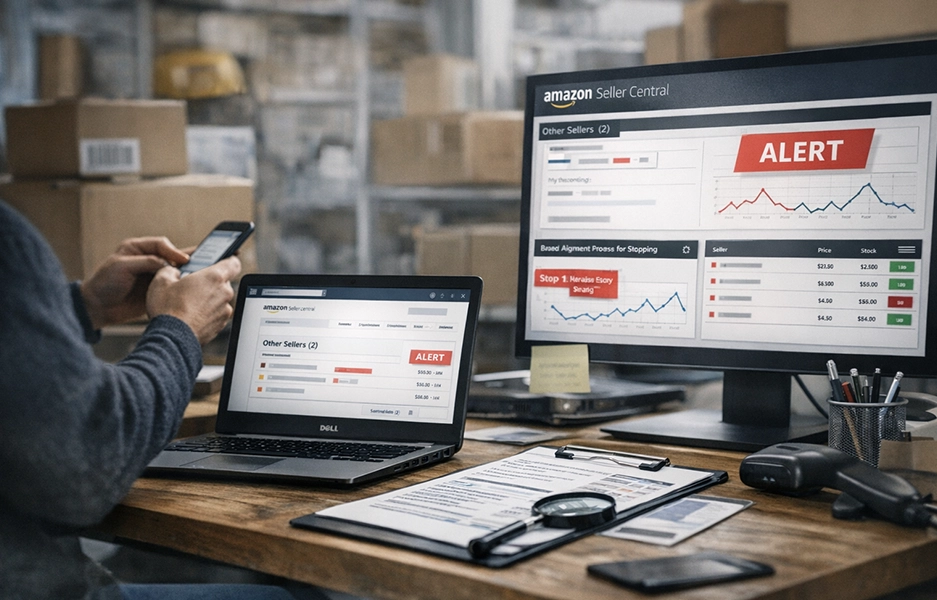
The Brand Alignment Process for Stopping Piggyback Sellers
Step 1: Monitor Every Listing and Seller
The foundation of enforcement is visibility. If you can’t see who’s selling on your listings, you can’t take action.
- Use advanced MAP monitoring software to track all sellers and pricing in real time across Amazon and 200+ marketplaces
- Set up alerts for new sellers, price drops below MAP, and changes in Buy Box ownership
Brands that need wider coverage across marketplaces can also benefit from a global Amazon price monitoring service to detect seller activity earlier.
Step 2: Identify and Trace the Source
Piggybackers get inventory from leaks in your supply chain—often from:
- Distributors overselling or not vetting buyers
- Liquidators acquiring overstock, then selling online
- Retail arbitrageurs taking advantage of promotions
- “Leaky” retail partners selling excess stock against agreements
To stop them, you need to:
- Conduct test buys and trace serial numbers/lot codes to the original distributor or partner
- Require “Do Not Sell” lists and strict reporting from your authorized network
- Audit purchase patterns for suspicious bulk orders or geographic inconsistencies
This is also why many brands eventually investigate why a listing is hijacked even when the product is real and whether the problem is tied to gray market diversion or authorized seller leaks. If inventory is repeatedly leaking, a stronger distribution control strategy is often required.
Step 3: Structured Enforcement and Seller Removal
Once you know who’s piggybacking, take swift, strategic action:
- Send cease & desist letters, escalating as needed (Brand Alignment achieves a 95%+ removal rate through a structured, multi-level enforcement process)
- For persistent violators, escalate to Amazon Brand Registry and use evidence of trademark, copyright, or material differences to request takedown
- Keep a record of all communications and enforcement activity for each case
For brands dealing with broader seller abuse, structured programs to remove unauthorized sellers on Amazon can support faster and more consistent cleanup.
Step 4: Proactive Prevention and Supply Chain Discipline
Stopping piggyback sellers isn’t just about removal—it’s about preventing new ones:
- Tighten distributor agreements with strong language about online sales and consequences for violations
- Enforce purchase limits, require more frequent reporting, and regularly audit your partners
- Implement a MAP enforcement program that provides immediate alerts and audit-ready documentation for every violation
If your team is still determining the exact nature of the threat, it can also help to understand cases where the Amazon hijacker is not counterfeit, because the enforcement path is different when the goods are authentic.
Step 5: Maintain and Evolve Your Strategy
Marketplace dynamics change quickly. Brands need ongoing, hands-on support to stay ahead:
- Re-audit your listings regularly and update your “Do Not Sell” lists
- Invest in ongoing training for your team and your channel partners
- Review and optimize your MAP and unauthorized seller enforcement strategies at least quarterly
The Brand Alignment Advantage
Our team combines real-time monitoring, deep investigation, and the highest removal rates in the industry:
- Over 95%+ unauthorized seller removal rate
- Custom enforcement for each client—no one-size-fits-all
- Permanent results that protect your margins, Buy Box, and long-term strategy
- Zero legal risk—no counterfeit claims without proof, lawyer-crafted notices only
Brands trying to stop piggybackers also benefit from understanding what Amazon seller piggybacking looks like in real-world listings, since not every unauthorized seller uses the same tactic.
Case Study:
One Brand Alignment client regained over 90% Buy Box control across all SKUs, added $373,000 in new revenue, and saw ROI jump by 1,590% after just 10 months of enforcement and channel control.
Final Word
Piggyback sellers don’t have to be the cost of doing business on Amazon. With comprehensive monitoring, supply chain discipline, and expert enforcement, your brand can reclaim your listings, protect your pricing, and restore trust with your partners and customers.
Ready to remove piggyback sellers and restore Buy Box control? Contact Brand Alignment’s experts here.


 Brand Alignment