

If you’re a brand owner or manufacturer, discovering unauthorized sellers on your Amazon listings can be frustrating and damaging. You might wonder: Where are these sellers coming from? Why is it so difficult to keep them off my listings? And most importantly—what’s the impact on your revenue and reputation?
At Brand Alignment, we help brands understand the root causes of unauthorized sellers and, more importantly, how to regain control. Here’s what every brand should know.
What Is an Unauthorized Seller?
An unauthorized seller is any third-party who lists your branded products on Amazon (or other marketplaces) without your explicit permission. They might be gray market resellers, arbitrageurs, liquidators, or even former authorized partners who are violating your distribution agreements. Unlike counterfeiters—who sell fake goods—unauthorized sellers often offer authentic products, but outside your approved sales channels. For a broader definition, see what unauthorized sellers are.
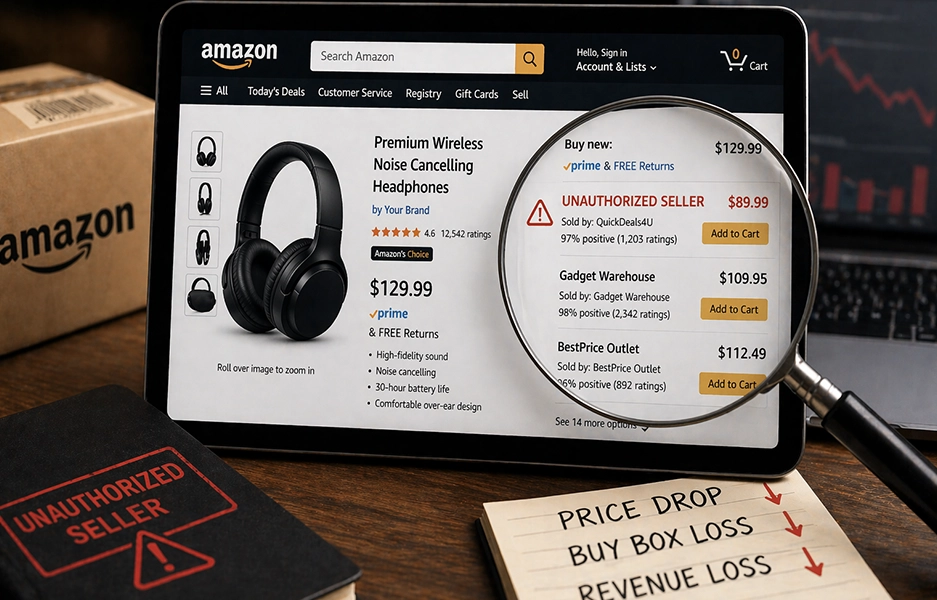
Why Do Unauthorized Sellers Appear on Amazon Listings?
1. Supply Chain Leaks
Most unauthorized sellers obtain authentic inventory through holes in your supply chain. This can include:
- Distributors selling excess or diverted stock.
- Retailers liquidating unsold products.
- Employees or partners exploiting purchasing privileges.
- International arbitrage—buying in one country to resell in another for profit.
These “leaks” are not always intentional, but once your product leaves your direct control, it can end up anywhere—including with a seller who undercuts your pricing on Amazon.
2. Gray Market Activity
The gray market refers to legitimate goods sold outside authorized distribution channels. While not illegal, gray market selling usually violates distribution agreements and disrupts price integrity. Gray marketers look for opportunities where they can buy inventory cheaply (clearance sales, promo stacking, liquidation lots) and resell on Amazon at lower prices. They’re driven purely by profit, not by supporting your brand or customer experience.
3. The First Sale Doctrine
In the U.S., the First Sale Doctrine allows individuals to resell products they’ve legally purchased—even if your brand doesn’t approve. This legal reality makes enforcement tricky: marketplaces like Amazon often won’t remove these sellers unless there’s a trademark, copyright, or counterfeit issue. As a result, cease & desist letters and proactive supply chain management are more effective than legal claims in most cases. This is also why many brands ask why Amazon is not helping remove unauthorized sellers.
4. Arbitrage and Liquidation
- Arbitrage Sellers: Scan online and offline stores for discounted products, buy in bulk, and resell on Amazon for a margin. They use repricing tools to always undercut your MAP (Minimum Advertised Price) and win the Buy Box.
- Liquidators: Purchase returned, overstocked, or distressed inventory from retailers or distributors, then sell it cheaply online. These products may be older, damaged, or outside your quality standards—but they are still listed as “new”.
5. Counterfeits and Infringement
Some unauthorized sellers go further—offering counterfeit, cloned, or trademark-infringing products. This directly damages your brand reputation, exposes customers to poor quality, and can even result in account suspension if left unchecked.
What Problems Do Unauthorized Sellers Cause?
- Price Erosion: They often ignore MAP policies, driving prices down, causing authorized partners to follow, and triggering a race to the bottom.
- Buy Box Loss: The lowest-price seller often wins Amazon’s Buy Box, reducing your revenue and visibility. Even authorized sellers may violate MAP just to keep up.
- Customer Confusion: Most shoppers can’t tell if they’re buying from you or a random reseller. Poor service, delays, or damaged products are still blamed on your brand.
- Diluted Channel Relationships: Brick-and-mortar partners may reduce orders or stop working with you if they can’t compete online.
- Brand Reputation Damage: Negative reviews and inconsistent product experiences erode trust and can lower your long-term market share.
This is also why many brands eventually need Buy Box recovery support after unauthorized sellers disrupt pricing and listing control.
What Types of Unauthorized Sellers Exist?
There’s no single profile—unauthorized sellers include:
- One-off sellers (casual flippers)
- Arbitrageurs
- Liquidators
- “Mom & Pop” shops
- Rogue distributors
- Counterfeiters
- Smash & grab sellers (using pop-up retail to acquire inventory)
- International or parallel importers
Each requires a different enforcement and prevention strategy. For a deeper breakdown, see 9 types of unauthorized sellers on Amazon and unauthorized third-party sellers on Amazon.
How Can Brands Fight Back?
1. Monitor Constantly
Real-time MAP and listing monitoring will show who is selling, at what price, and where. Automated software plus expert oversight is the gold standard for catching violations quickly. Many brands use Amazon MAP monitoring for this.
2. Close Supply Chain Leaks
Audit your distributors and partners. Use test buys, serial number tracing, and data analysis to uncover how inventory is being diverted. Create and enforce “Do Not Sell” lists.
3. Enforce Policies
Send cease & desist letters to unauthorized sellers. Escalate to legal action when clear trademark or copyright infringement occurs. Consider stricter contracts, serialized tracking, and controlling who can buy from you. In many cases, brands combine this with Amazon MAP enforcement and efforts to remove unauthorized sellers on Amazon.
4. Proactive Prevention
Limit wholesale purchases, implement strong MAP enforcement, and educate partners on the risks of gray market sales. The best solution is always to prevent unauthorized sellers from getting inventory in the first place. You can also review our guide on how to remove unauthorized sellers on Amazon.
Final Thought
Unauthorized sellers aren’t just a nuisance—they’re a fundamental threat to brand value, pricing power, and marketplace trust. But with the right strategy and technology, you can regain control.
Want to see how Brand Alignment can help you eliminate unauthorized sellers and protect your Buy Box?
Connect with our team here. We’ll walk you through the process step by step.
Need a tailored strategy for your brand’s unauthorized seller problem? Let’s talk.
Take control of your marketplace presence with fast, effective brand protection strategies.
Every day, unauthorized sellers and MAP violations can erode your pricing, reputation, and revenue. Don’t wait for problems to escalate, start enforcing your policies and reclaim your market authority with our proven tools and expert support.


 Brand Alignment