

When brands list products on Amazon, they often expect their official offer to be the main—and sometimes only—source for buyers. Yet, thanks to the marketplace’s open nature, “piggybacking” is a widespread issue. Piggybacking occurs when other sellers, often with no relationship to your brand, attach themselves to your listing and start selling the same product—sometimes at lower prices, sometimes with different shipping or customer service standards. For a complete breakdown of this problem, start with our pillar guide on how to deal with an Amazon hijacker.
Many brands are surprised to find their ASINs have multiple offers, often from sellers they’ve never heard of. Let’s clarify what piggybacking really is, why it’s a risk (even if the products are authentic), and how to develop a brand protection strategy that keeps your Buy Box—and your reputation—intact.
What Is Amazon Seller Piggybacking?
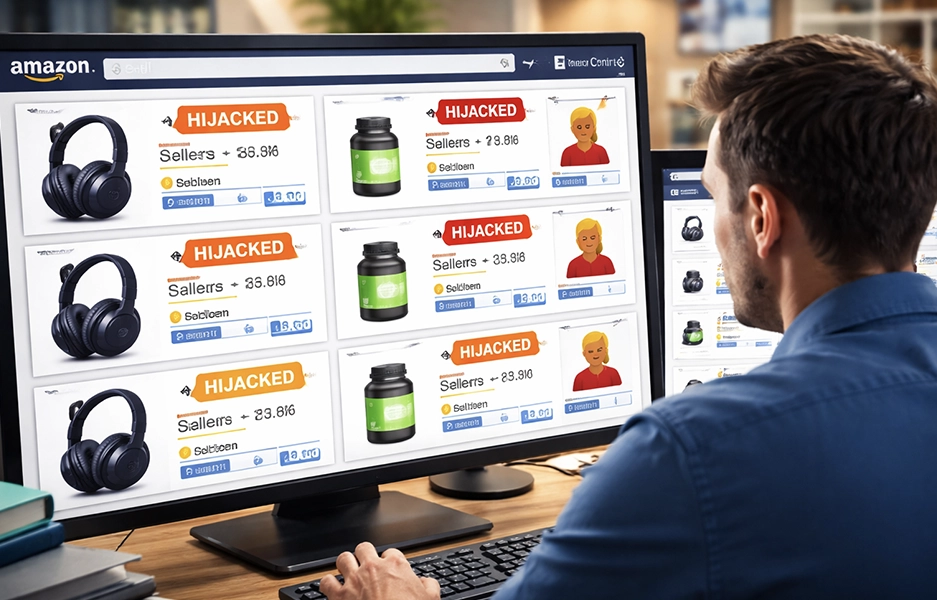
Piggybacking is when a third-party seller “rides” on your listing, offering the same ASIN for sale. Amazon’s system is designed so that any seller with authentic inventory can list against an existing product page. These sellers might source goods through gray market diversion, retail arbitrage, liquidation lots, or even leaks from your own distribution network. Piggybackers may offer genuine product, but their presence can have significant negative consequences for your brand, channel, and revenue. If you’re seeing this happen, you’re likely dealing with the exact scenario explained in Amazon listing hijacked but product is real.
Why Does Amazon Allow This?
Amazon’s philosophy is simple: if the product is real and matches the listing, it can be sold by anyone who lawfully owns it, under the First Sale Doctrine. Amazon does not vet whether a seller is “authorized” by the brand, only that the product is authentic and in new condition. This creates opportunity for piggybackers to appear—even if you never sold to them directly. This is also why many brands encounter situations where hijackers are selling authentic product.Why Is Piggybacking a Problem for Brands?
1. Price Erosion and Buy Box Loss
Piggybackers often undercut MAP (Minimum Advertised Price) or ignore your pricing policy entirely. If they win the Buy Box by offering the lowest price or faster shipping, your official listing can lose sales—even if you maintain high inventory and strong metrics. This price instability also damages your relationships with authorized retail and distribution partners, as they find themselves unable to compete. To stay ahead of this, brands rely on Amazon MAP monitoring and structured enforcement processes.2. Customer Experience Risks
Piggyback sellers may use different fulfillment methods, have varied return policies, or deliver inconsistent service. Customers who receive late shipments, damaged goods, or poor support usually blame the brand—not the piggyback seller—leading to negative reviews and lasting reputation damage.3. Channel Conflict and Data Chaos
Piggybacking erodes trust with your channel partners. Retailers and distributors who follow your MAP policy can’t compete with rogue online sellers who ignore it. The result is a race to the bottom on price, complaints from partners, and reduced buy-in for future launches. At the same time, data from unauthorized sales disrupts demand planning, inventory management, and marketing ROI measurement.4. Increased Complexity in Enforcement
Piggybackers are often hard to identify. They may use shell companies, fake addresses, and multiple Amazon accounts to stay anonymous. Even if you manage to remove one, others may quickly take their place. Many of these cases fall into the category of Amazon hijackers that are not counterfeit, which require a more strategic approach.What Types of Piggybackers Exist?
- Gray Market Sellers: Products diverted from authorized channels or sold internationally and reimported. Learn more about whether gray market is legal.
- Liquidators: Selling off overstock or returned goods bought in bulk at auctions. This is often tied to how pallets end up on Amazon.
- Retail Arbitrageurs: Purchasing discounted stock during promotions or clearance sales for resale.
- Unauthorized Retailers or Distributors: “Leaky” channel partners selling outside their agreements.
How Can Brands Address Piggybacking?
1. Comprehensive Listing & Seller Monitoring
You can’t stop what you can’t see. Use advanced tools to track every offer on your ASINs, flagging new sellers and MAP violations in real time. Brands that want full visibility across marketplaces often implement global price monitoring solutions.2. Supply Chain Controls
Tighten contracts with authorized distributors and retailers, adding clear “Do Not Sell” clauses and regular reporting requirements. Audit purchase patterns and conduct test buys to find leaks. A strong distribution control strategy is critical to preventing repeat issues.3. Targeted Enforcement
Brand Alignment helps brands remove unauthorized sellers through a proven process:- Send structured cease and desist notices to violators
- Conduct investigations and escalate when needed
- Work with Amazon’s systems like Amazon Brand Registry to remove sellers using your IP or creating “materially different” offers
- Achieve high removal rates (95%+) without unnecessary legal risk
4. Proactive Prevention
Limit bulk orders, require more frequent partner check-ins, and run regular audits to ensure your authorized network isn’t inadvertently fueling piggybacking. Strong channel education and “Do Not Sell” lists make it harder for unauthorized sellers to get product in the first place. For a deeper tactical breakdown, see how to stop piggyback sellers.Brand Alignment: Your Partner in Marketplace Control
Piggybacking can feel like a game of whack-a-mole. But with real-time visibility, tight supply chain discipline, and aggressive enforcement, brands can protect pricing, restore Buy Box control, and maintain a trusted customer experience. Our clients see >90% Buy Box share, reduced price erosion, and higher ROI on channel investments. Want to see how Brand Alignment removes piggyback sellers and restores your marketplace performance? Contact our team here.Take control of your marketplace presence with fast, effective brand protection strategies.
Every day, unauthorized sellers and MAP violations can erode your pricing, reputation, and revenue. Don’t wait for problems to escalate, start enforcing your policies and reclaim your market authority with our proven tools and expert support.


 Brand Alignment