

In a world of price wars and e-commerce disruption, brands constantly look for ways to maintain price integrity and healthy reseller relationships. Minimum Advertised Price (MAP) policies are now at the center of that strategy. But are they actually legal? What should your brand consider before implementing or enforcing MAP?
Let’s break down the facts, bust common myths, and explain what you can (and can’t) do to protect your brand.
What Is MAP Pricing?
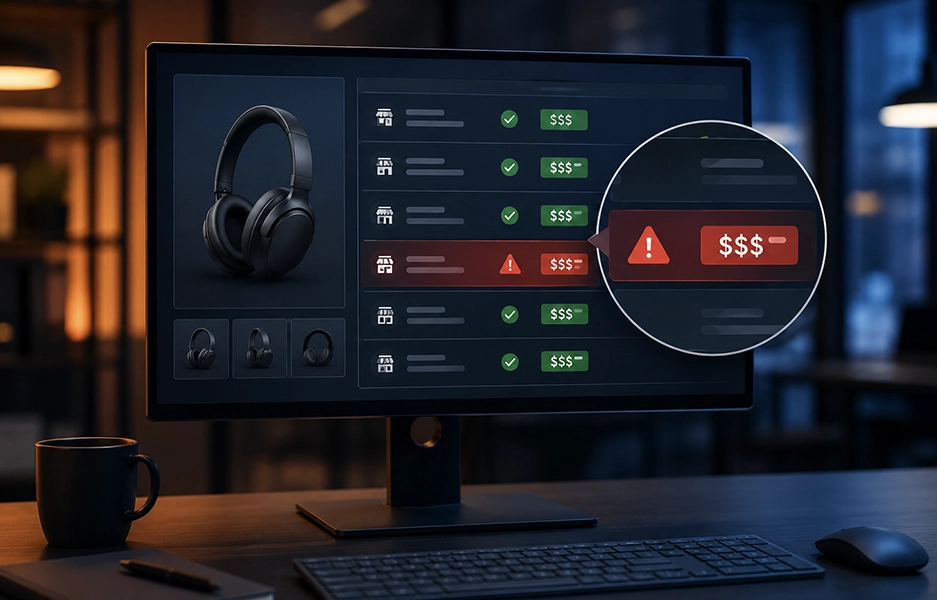
MAP stands for Minimum Advertised Price. It’s the lowest price a reseller is permitted to advertise a product for, according to the brand’s written policy. The critical point: MAP affects advertised price — not the final selling price at the register or checkout.
For example: your MAP for a wireless headset is $99. Authorized dealers can’t advertise it below $99 — on their websites, in-store flyers, or online marketplaces. However, if a customer calls and asks for a discount, or if a brick-and-mortar store offers a coupon at checkout, that’s not considered an “advertised” price.
MAP is different from resale price maintenance (RPM), where a manufacturer sets the actual sale price. RPM is much more legally sensitive than MAP.
Is MAP Pricing Legal in the U.S.?
Yes — MAP policies are generally legal in the United States, if implemented and enforced correctly. MAP policies are a form of “unilateral policy,” where the manufacturer simply states the lowest price it will permit dealers to advertise. Under U.S. antitrust law, brands can set the terms of how their products are marketed and advertised, provided they do not agree or “collude” with retailers on the final sale price.
MAP becomes illegal when it crosses the line into price-fixing or other anti-competitive practices.
What’s Allowed
- Unilateral Policy: A brand can say, “If you advertise our product below $99, we may stop supplying you.”
- Non-negotiated: The policy is set by the brand alone — dealers can take it or leave it.
- No Resale Price Control: Resellers are free to sell below MAP if they don’t advertise the lower price.
What’s Not Allowed
- Collusion or Agreement: If a brand and its resellers agree (explicitly or implicitly) to fix prices — advertised or otherwise — that can violate antitrust law.
- Punishing Dealers for Final Sale Price: Penalizing resellers for actually selling below MAP (not just advertising below it) may raise legal risk, especially if it resembles resale price maintenance.
The “Colgate Doctrine” — a key Supreme Court case — establishes that a brand can unilaterally set conditions for doing business, as long as it doesn’t form a “contract, combination, or conspiracy” with resellers to fix prices.
MAP in Practice: Real Risks and Compliance
Why do brands use MAP?
- Protect Brand Equity: Prevents discounting that damages premium positioning.
- Support Channel Partners: Gives authorized sellers a level playing field, discouraging price wars.
- Win the Buy Box: On platforms like Amazon, price erosion can lead to loss of Buy Box and loss of control.
But there are pitfalls:
- Overly Restrictive Policies: If your MAP policy strays into controlling actual sales prices, you risk violating antitrust law.
- Enforcement Bias: Selective or uneven enforcement can trigger lawsuits from resellers, alleging unfair treatment or even price discrimination.
- Communication: MAP should be a policy, not an “agreement.” Never ask retailers to sign a MAP contract, negotiate pricing, or discuss enforcement actions collectively.
Important: Each state and country may have additional laws regarding price policies and competition. MAP policies are largely unenforceable in Canada and outright banned in parts of Europe.
MAP Enforcement: What’s Legal?
Brands Can:
- Monitor advertised prices across marketplaces and authorized channels.
- Warn or cut off supply to dealers who violate MAP.
- Provide MAP-compliant advertising support, like co-op dollars or marketing incentives, to compliant sellers.
Brands Cannot:
- Demand a signed agreement to comply with MAP as a condition of supply.
- Collude with dealers or groups of resellers to set prices.
- Retaliate against resellers for their actual selling price (unless the sale price is advertised).
The safest MAP policies are unilateral and enforced without negotiation or exception: “Here’s our MAP. If you advertise below it, we reserve the right to stop doing business with you — no discussion.”
MAP, Marketplaces, and the Internet
The explosion of Amazon, Walmart.com, and other marketplaces has made MAP enforcement more complex and more important. Brands face:
- MAP Violations from Unauthorized Sellers: Sellers outside the authorized network often ignore MAP, dragging down pricing for everyone.
- Automated Price Matching: Retailers using price-matching bots can inadvertently trigger cascades of MAP violations.
Best practices include using MAP monitoring software to detect and document violations across all major platforms, communicating your policy clearly to all resellers and acting promptly and consistently on violations, and where possible limiting distribution to trusted, authorized sellers who are accountable in their own sales channels.
What About International MAP?
Brands selling globally need to adapt:
- Europe: Most EU countries view MAP and RPM as anti-competitive and illegal under EU law.
- Canada: MAP policies are generally not enforceable.
- Asia: Laws vary widely.
Always seek region-specific legal advice before expanding MAP enforcement outside the U.S.
Brand Alignment’s Approach
At Brand Alignment, we help brands design, monitor, and enforce MAP policies that are legally robust, channel-appropriate, and proven to protect margin and brand equity. Our approach is strictly data-driven and compliant with all U.S. competition laws — no “gray areas” or risky tactics.
| MAP Element | Legal in U.S.? | Legal Risk? |
|---|---|---|
| Unilateral MAP Policy | Yes | Low |
| MAP “Agreement”/Collusion | No | High (antitrust) |
| Controlling Sale Price (RPM) | Risky | High (antitrust) |
| Cutting off Violators | Yes | Low (if unilateral) |
Final Word: MAP Is Legal — If Done Right
MAP pricing is legal when you unilaterally set and consistently enforce a clear, well-communicated policy on advertised pricing. Problems arise only when brands cross into collusion, control final sale price, or enforce policies inconsistently.
If your brand is struggling with MAP enforcement or marketplace price erosion, our team at Brand Alignment can guide you through best practices and customized solutions. Connect with us here for expert advice on building a legal, effective MAP strategy.
This post is for informational purposes only and does not constitute legal advice. For legal questions or complex enforcement issues, consult with a qualified attorney familiar with antitrust and competition law.
Thank you for reading our post, ‘Is MAP Pricing Legal? A Straightforward Guide for Brands.’ We hope you found it helpful.
Take control of your marketplace presence with fast, effective brand protection strategies.
Every day, unauthorized sellers and MAP violations can erode your pricing, reputation, and revenue. Don’t wait for problems to escalate, start enforcing your policies and reclaim your market authority with our proven tools and expert support.




 Brand Alignment