
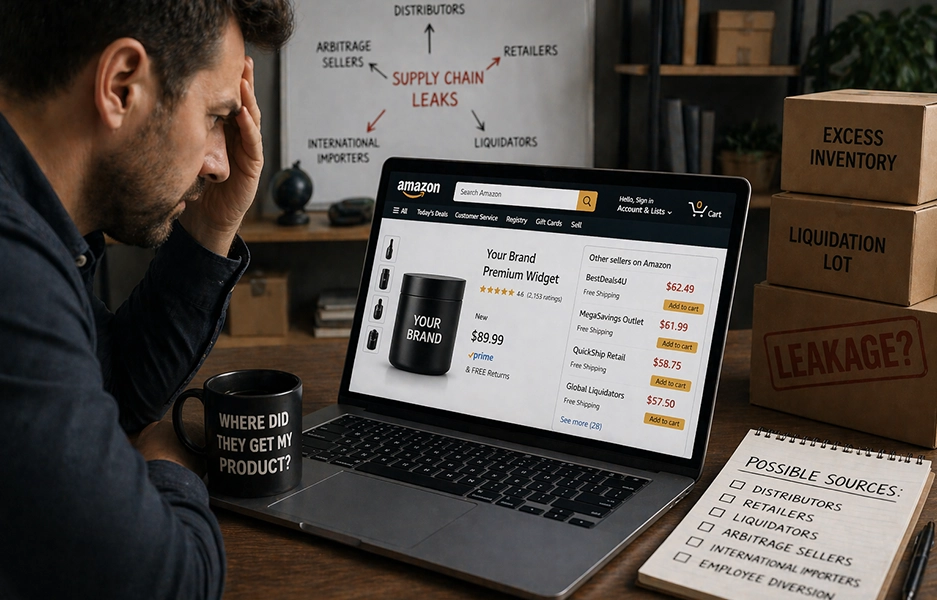
Many brand owners are shocked to discover their products for sale on Amazon—especially if they’ve never sold a single unit on the platform. How does this happen? Who is supplying these sellers? If you don’t sell on Amazon, how are others listing your products and profiting from your brand?
At Brand Alignment, we’ve helped hundreds of brands unravel this exact problem. Let’s break down the real sources and solutions. If you’re seeing your products online unexpectedly, you’re not alone—many brands ask why their product is on Amazon in the first place.
How Do My Products End Up on Amazon Without My Permission?
1. Distribution “Leakage”
Even if you avoid Amazon, your products can find their way there via your existing distribution network. Common leakage points include:
- Distributors: Large distributors may resell to secondary wholesalers or “jobbers,” who then pass inventory to Amazon sellers—sometimes in violation of your agreements. This often leads to situations like distributors undercutting brands on Amazon.
- Retailers: Brick-and-mortar stores or e-commerce shops may offload unsold, discounted, or clearance inventory to resellers, liquidators, or “friends” who list on Amazon.
- International Channels: Products exported for sale in other countries are sometimes re-imported or “parallel imported” back into the US for resale on Amazon, often at lower prices.
Once your product leaves your warehouse, it can change hands several times before appearing online.
2. Grey Market Arbitrage
Arbitrage sellers are always hunting for profit opportunities. They monitor promotions, coupons, and clearance events on your website or other retail sites, buy products at a steep discount, and list them on Amazon at a markup. Some purchase directly from authorized resellers who aren’t monitoring where their stock ends up. This is one of the main drivers behind unauthorized sellers appearing on listings.
3. Liquidators and Closeouts
If a retailer or distributor can’t sell through inventory, they often liquidate it in bulk. Liquidators buy these lots, break them up, and resell the products online—including on Amazon. Sometimes the inventory is damaged, expired, or returned—but it still makes its way into the Amazon marketplace.
4. Employee or Internal Diversion
In rare cases, employees or partners might divert product from warehouses or distribution centers—knowingly or unknowingly—into unauthorized channels. These units then appear on Amazon under a third-party seller’s name.
5. International Parallel Importers
Some sellers exploit price differences between countries. For example, if your product sells for less in Europe, an importer can buy in bulk overseas and resell in the US via Amazon. This is known as “parallel importing” and is technically legal under US First Sale Doctrine—unless trademark or packaging differences create legal grounds for restriction.
Why Is This So Hard to Prevent?
First Sale Doctrine
US law gives the right to resell any genuine, lawfully purchased product. That means even if you don’t sell on Amazon, anyone who obtains your product through legitimate means can list it for sale there—unless you have a tightly controlled distribution and authorized reseller program.
Marketplace Policies
Amazon does not restrict the sale of branded products unless you are enrolled in special programs (like Brand Gating) or prove intellectual property violations, counterfeit activity, or unauthorized use of trademarks or copyrights. This is why many brands wonder why Amazon does not remove unauthorized sellers.
Opaque Seller Networks
Unauthorized sellers often operate under vague LLCs, PO boxes, or fake storefronts. They buy from your authorized channels, exploit weaknesses in supply chain visibility, and are quick to pivot if discovered. Many use repricing software and sophisticated strategies to stay one step ahead. In some cases, this overlaps with behaviors seen in listing hijackers.
What Risks Does This Create for My Brand?
- Price Erosion: Unauthorized sellers rarely honor MAP (Minimum Advertised Price), so your brand’s pricing quickly collapses online.
- Buy Box Suppression: Rogue sellers can win the Amazon Buy Box, diverting sales and harming relationships with your authorized partners.
- Poor Customer Experience: Outdated, damaged, or returned goods from liquidation channels lead to bad reviews and customer confusion.
- Brand Reputation Damage: You lose control over who represents your brand, how products are marketed, and what customers receive.
What Can I Do About It?
1. Audit and Tighten Your Distribution
Carefully vet all distributors and require strict reporting. Limit sales to partners who will enforce your rules. Regularly review where your inventory is going.
2. Establish “Do Not Sell” Policies
Draft agreements that prevent partners from selling to third parties or on Amazon, and enforce consequences for violations.
3. Track and Trace Inventory
Use serialized products or batch tracking to trace the origins of diverted inventory. Test buys on Amazon can reveal sources and help you plug leaks.
4. Monitor Online Channels
Implement MAP monitoring software and partner with a brand protection team to identify unauthorized sellers and pricing violations in real time.
5. Enforce Your Rights
Send cease & desist letters, escalate with Amazon when trademark or copyright is infringed, and take legal action if necessary. Many brands also rely on unauthorized seller removal programs and MAP enforcement to regain control.
Conclusion
You don’t need to sell on Amazon for your products to show up there. Today’s supply chains are complex—and even one weak link can result in rogue listings, price erosion, and brand damage. The key is vigilance: monitor your channels, enforce agreements, and take action against violators before the problem escalates.
Need to investigate how your product ended up on Amazon?
Connect with Brand Alignment’s experts here. We’ll help you trace the source, close the leaks, and regain control of your brand.
Take control of your marketplace presence with fast, effective brand protection strategies.
Every day, unauthorized sellers and MAP violations can erode your pricing, reputation, and revenue. Don’t wait for problems to escalate, start enforcing your policies and reclaim your market authority with our proven tools and expert support.


 Brand Alignment