

If you’re a brand owner or manufacturer, it’s natural to feel frustrated—or even betrayed—when you see unfamiliar or unauthorized sellers appear on your Amazon listings.
You may ask: “Why is Amazon allowing other sellers to list my products? Shouldn’t I be able to decide who sells my brand?”
The answer, while frustrating, lies in Amazon’s core business model and marketplace philosophy.
Amazon: Marketplace First, Retailer Second
Amazon is more than just an online retailer; it’s a massive open marketplace.
This means Amazon’s priority is to offer:
- The greatest product selection
- The lowest possible prices
- The most competition between sellers
All of this is designed primarily for the benefit of shoppers—not brands.
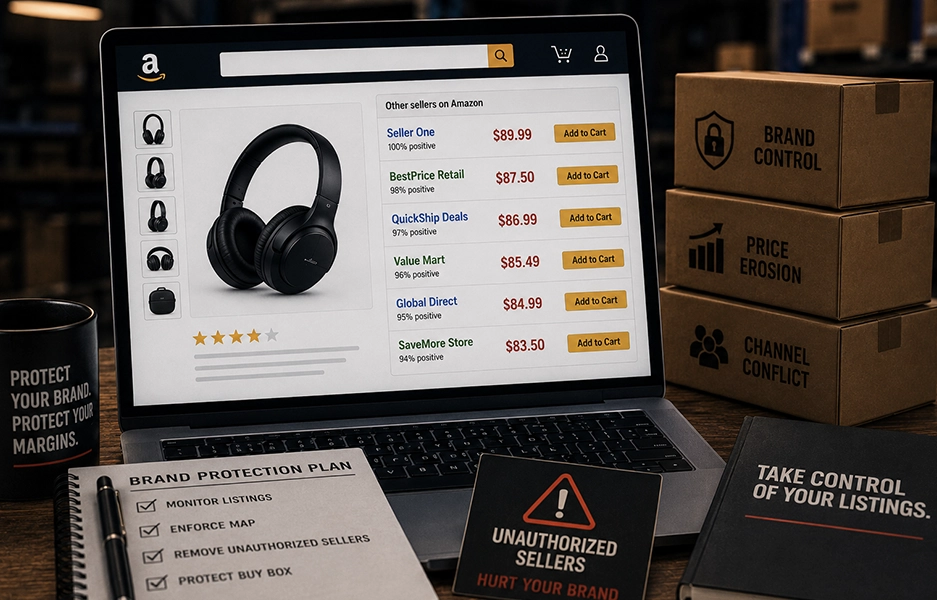
What Does This Mean for Brands?
- Anyone who legally acquires your product can potentially list it on your ASIN.
- Amazon does not require sellers to be “authorized” by the brand.
- Amazon’s algorithms generally reward competition, lower pricing, and fast fulfillment.
- Unless your products are gated or legally restricted, Amazon typically allows multiple sellers to share the same listing.
This is part of Amazon’s shared listing model, which surprises many brands the first time they experience it.
If you are wondering why your listings suddenly have unknown sellers, you may also want to read:
- Why Is My Listing Being Shared?
- Random Sellers on My Amazon Listing
- Unauthorized Sellers on My Amazon Listing
Why Does Amazon Allow This?
1. More Selection and Lower Prices
Amazon wants shoppers to compare multiple offers on the same product page. More sellers often create lower prices and faster shipping.
2. Inventory Stability
If one seller goes out of stock, another seller can continue fulfilling customer demand.
3. Marketplace Revenue
Amazon earns fees from third-party sales, giving the company a strong financial incentive to keep the marketplace open to as many sellers as possible.
What Are the Risks for Brands?
Price Erosion
Competing sellers frequently ignore MAP policies, leading to race-to-the-bottom pricing.
Learn more about Amazon MAP monitoring, Amazon MAP enforcement, and how the Amazon Buy Box works.
Buy Box Instability
The seller with the best pricing and fulfillment metrics often wins the Buy Box—even if it is not your brand or your preferred partner.
Some brands eventually need an Amazon Buy Box recovery strategy.
Channel Conflict
Retailers and distributors may become frustrated when rogue Amazon sellers undercut pricing.
This is especially common when brands lack clear channel controls or selective distribution systems. See selective distribution pros and cons and how to stop distributors from selling on Amazon.
Customer Experience Damage
Poor fulfillment, counterfeit products, or damaged inventory from unauthorized sellers can hurt your reviews and brand reputation.
In some cases, brands need additional counterfeit protection and Amazon test buys to investigate seller behavior.
Does Amazon Ever Restrict Sellers?
Sometimes—but only under specific circumstances.
Amazon may gate a brand or product category when:
- There is a strong history of counterfeiting
- Customer safety concerns exist
- Amazon faces regulatory or legal pressure
- The brand provides extensive supporting documentation
However, true brand gating is relatively rare for most consumer brands.
This is why many companies wonder why Amazon allows hijackers on their listing or why Amazon isn’t helping remove unauthorized sellers.
What Rights Do Brands Have on Amazon?
Brand Registry
Amazon Brand Registry gives brands access to content management and infringement reporting tools.
IP Complaints
If sellers infringe trademarks, copyrights, or sell counterfeit products, brands may submit complaints for removal.
Supply Chain Enforcement
Most successful enforcement happens outside Amazon itself:
- Distributor controls
- MAP enforcement
- Supply chain investigations
- Test buys
- Cease & desist messaging
Brands often combine this with unauthorized seller removal strategies and tools like Amazon Transparency and Interoperability.
What You Can Do as a Brand
1. Tighten Channel Controls
Audit your supply chain, distributor agreements, and retail partners to reduce leakage.
2. Monitor Your Listings
Track new sellers, pricing changes, and Buy Box ownership continuously.
3. Investigate Seller Sources
Many brands underestimate how inventory reaches Amazon. See How Do Resellers Get My Product? and How Do Sellers Get My Product If I Don’t Sell on Amazon?.
4. Build a Long-Term Strategy
Amazon brand protection is rarely solved through a single complaint or takedown. Sustainable control requires:
- Monitoring
- Distribution discipline
- MAP enforcement
- Supply chain investigations
- Partner vetting
Final Thoughts
Amazon’s marketplace structure is designed around competition—not exclusivity.
That means unauthorized sellers, listing sharing, and pricing pressure are often built into the system itself.
However, brands that understand Amazon’s philosophy and proactively manage their distribution strategy can significantly reduce unauthorized seller activity and regain more control over their marketplace presence.
If you need help navigating Amazon’s policies, cleaning up unauthorized sellers, or protecting your Buy Box, Brand Alignment can help.
Take control of your marketplace presence with fast, effective brand protection strategies.
Every day, unauthorized sellers and MAP violations can erode your pricing, reputation, and revenue. Don’t wait for problems to escalate, start enforcing your policies and reclaim your market authority with our proven tools and expert support.


 Brand Alignment