

If you’re a brand owner or manufacturer, few things are more frustrating than seeing unknown, unauthorized, or “random” sellers suddenly appear on your Amazon product listings. You may have spent years developing your brand, protecting your channels, and building a reputation, only to find that sellers you’ve never heard of are now selling your products, often at lower prices and with little concern for your policies.
How does this happen? What’s at risk? And most importantly, how can you regain control?
Understanding Amazon’s Marketplace Structure
First, it’s important to recognize that Amazon is fundamentally an open marketplace. Unlike a traditional retailer, Amazon allows third-party sellers from all over the world to list products for sale, sometimes with little more than a business license, tax information, and a seller account.
The “random sellers” you see are often third-party resellers who acquired your product through a variety of channels, not always with your permission.
Key Point:
If a seller has authentic inventory and meets Amazon’s minimum requirements, they can offer your product for sale on your listing (ASIN) unless the listing is gated or restricted in some way.
To better understand why this happens, it’s important to understand Amazon’s shared listing model and how multiple sellers compete on the same ASIN.
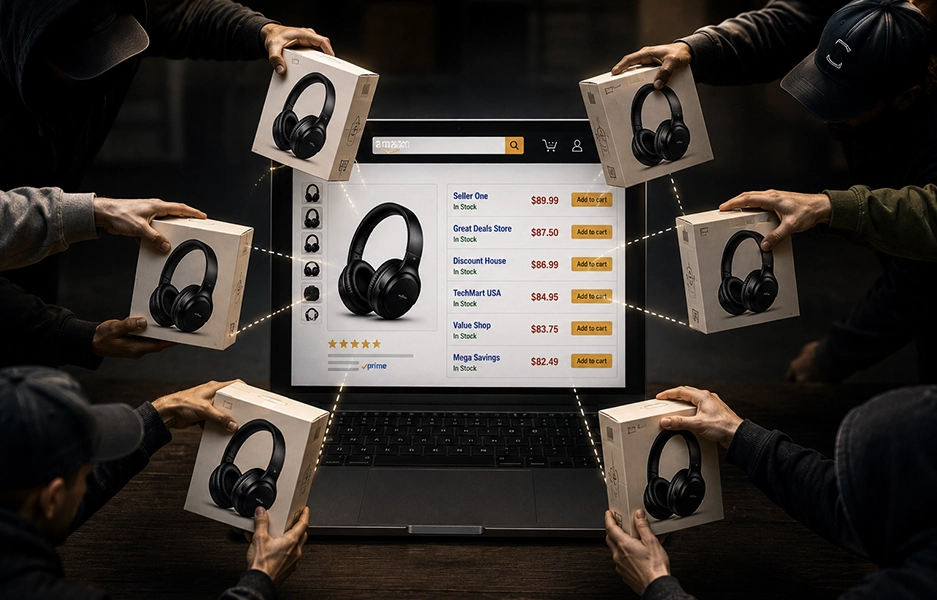
Why Do Random Sellers Target Your Listings?
There are several reasons your listings might attract unauthorized or unfamiliar sellers:
- Channel Leakage: Even if you have agreements with distributors and retailers, products can leak into the grey market and end up in the hands of unauthorized resellers.
- Retail Arbitrage: Some sellers buy your products at retail during promotions or clearance events and resell them online for profit.
- Liquidation & Overstock: Overstock inventory and liquidation channels frequently feed Amazon resellers.
- Returns & Refurbished Inventory: Returned or damaged goods may quietly re-enter the marketplace through secondary channels.
- International Diversion: Products intended for foreign markets sometimes get redirected back into the U.S. Amazon ecosystem.
Many brands eventually ask how resellers get their product or where grey market sellers source inventory. In many cases, the issue originates from weak supply chain controls or uncontrolled downstream distribution.
For a deeper breakdown of seller behavior, see our guide on types of unauthorized sellers.
What Are the Risks of Random Sellers?
Unauthorized sellers create far more than pricing problems.
- MAP Violations & Price Erosion: Sellers frequently ignore MAP policies, causing aggressive pricing competition and long-term margin erosion.
- Buy Box Loss: Even a minor pricing difference can result in losing the Buy Box to another seller. This often contributes to Amazon Buy Box suppression.
- Customer Experience Damage: Unauthorized sellers may ship expired, damaged, incomplete, or mishandled inventory.
- Channel Conflict: Your authorized distributors and retailers may become frustrated competing against rogue marketplace sellers. Learn more in our article about channel conflict on Amazon.
- Review Pollution: Negative customer experiences impact your listing reviews, even if the problem seller disappears later.
How Can You Tell Where They’re Getting Your Product?
This is one of the most important questions in any brand protection investigation.
- Test Buys: Purchase directly from suspicious sellers and inspect packaging, lot codes, serial numbers, and fulfillment patterns.
- Distribution Audits: Review wholesale, distributor, and retail relationships for signs of leakage.
- Returns & Liquidation Analysis: Determine whether returns, damaged inventory, or overstock are being resold externally.
- Grey Market Investigation: Analyze whether inventory intended for other regions is reappearing online.
Many sophisticated sellers operate inside hidden reseller ecosystems and supply chains. Our article on the sources of grey market inventory explains how products move from authorized channels into unauthorized marketplaces.
What Can You Do About Random Sellers?
1. Monitor Your Listings Continuously
Brands should constantly monitor Amazon listings for:
- New sellers appearing unexpectedly
- MAP violations
- Buy Box changes
- Suspicious fulfillment behavior
Using tools like Amazon MAP Monitoring helps brands detect unauthorized activity early before it escalates.
2. Strengthen Supply Chain Controls
- Add marketplace restrictions to distributor agreements
- Create Do-Not-Sell lists
- Limit bulk purchases when necessary
- Use serialization or hidden identifiers
Many brands also work to stop sellers from jumping on their listing through stronger channel enforcement and tighter distribution policies.
3. Enforce MAP and Marketplace Policies
Unauthorized sellers often survive because brands monitor inconsistently.
Structured enforcement programs using Amazon MAP Enforcement can reduce repeated violations and discourage reseller activity.
4. Investigate Unauthorized Sellers
Test buys and seller investigations are often necessary to identify the source of inventory leakage.
Services like Amazon Test Buys and Unauthorized Seller Removal help brands document evidence and enforce policies more effectively.
5. Protect the Buy Box
Many brands underestimate how much random sellers impact conversion rates and Buy Box ownership.
Programs like Amazon Buy Box Recovery help stabilize pricing and improve listing control.
Final Thoughts: Take Back Control
Random sellers are a reality of the Amazon marketplace, but they are rarely random in origin. Most unauthorized seller activity can be traced back to supply chain leakage, weak agreements, liquidation channels, or uncontrolled reseller activity.
The brands that successfully reduce unauthorized sellers usually combine:
- Continuous monitoring
- MAP enforcement
- Supply chain audits
- Seller investigations
- Strategic enforcement programs
If you’re overwhelmed or unsure where to start, Brand Alignment specializes in identifying root causes, investigating unauthorized sellers, and helping brands regain marketplace control.
Contact Brand Alignment here:
https://www.brandalignment.com/contact-us/
Take control of your marketplace presence with fast, effective brand protection strategies.
Every day, unauthorized sellers and MAP violations can erode your pricing, reputation, and revenue. Don’t wait for problems to escalate, start enforcing your policies and reclaim your market authority with our proven tools and expert support.
 Brand Alignment