

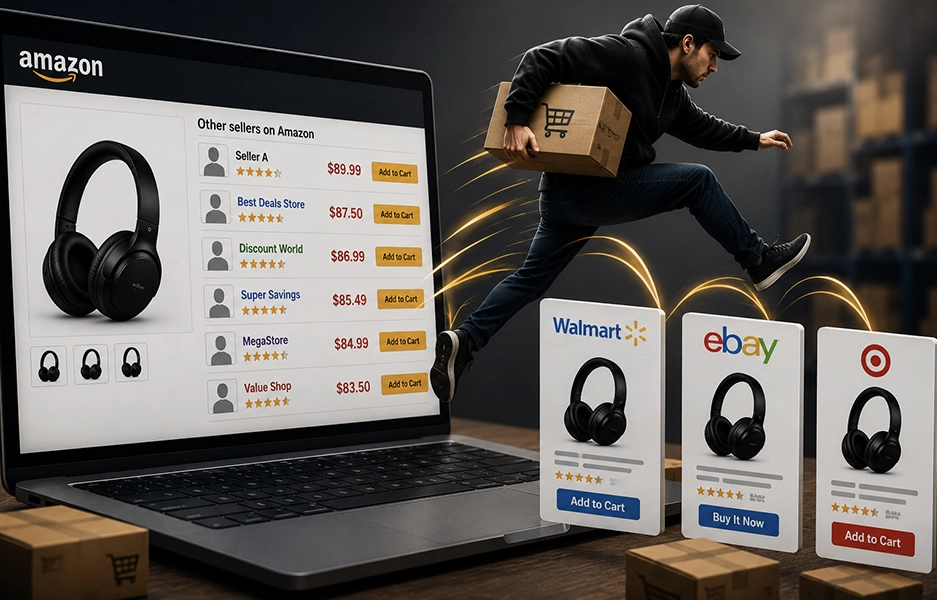
If you’re a brand owner or manufacturer, you’ve likely experienced the frustration of seeing unfamiliar or unauthorized sellers suddenly “jump on” your Amazon listings.
These sellers often appear out of nowhere, sometimes pricing aggressively low, sometimes offering products you never authorized for online sale. For many brands, it feels like losing control of their own marketplace presence.
So why does this happen, what’s actually at stake, and—most importantly—how do you stop it?
Here’s a strategic breakdown of how brands reduce unauthorized seller activity and regain control of their listings.
Why Do Sellers Jump on Your Listing?
Amazon operates under an open marketplace model.
That means almost anyone with authentic inventory and an Amazon seller account can potentially list against your ASIN—even if you never approved them.
This is part of Amazon’s shared listing model.
Unauthorized sellers commonly appear because:
- Distributors sell inventory to Amazon resellers
- Retail arbitrage sellers buy discounted inventory and resell online
- Liquidation or returned inventory enters secondary markets
- International inventory is diverted back into the U.S. market
- Grey market sellers source inventory indirectly
If you want a deeper breakdown of how inventory leaks happen, read How Do Resellers Get My Product?.
Many of these sellers fall into broader categories explained in our guide to types of unauthorized sellers.
Why Does It Matter?
Price Erosion and MAP Violations
Unauthorized sellers often ignore pricing policies, creating a race to the bottom.
This is why brands invest in Amazon MAP monitoring, Amazon MAP enforcement, and guides like how to enforce your MAP pricing on Amazon.
You may also want to review these best practices to avoid MAP violations.
Buy Box Loss
Lower-priced sellers frequently win the Buy Box, even when the brand itself is selling the product.
This can eventually lead to Amazon Buy Box suppression or unstable Buy Box ownership.
Some brands ultimately require an Amazon Buy Box recovery program.
Customer Experience Risks
Unauthorized sellers may ship expired, damaged, incomplete, or even counterfeit inventory.
Customers rarely blame the seller. They blame the brand.
Channel Conflict
Retailers and wholesale partners may stop supporting your products if rogue Amazon sellers continuously undercut pricing.
How to Stop Sellers from Jumping on Your Listing
1. Tighten Your Distribution and Supply Chain
The biggest mistake many brands make is focusing only on Amazon instead of the upstream supply chain.
- Audit all distributors and retail partners
- Identify where inventory leakage may occur
- Use “Do Not Sell” lists
- Monitor unusual order patterns and bulk purchases
- Restrict online marketplace resale contractually
Many sophisticated grey market operations operate through layered sourcing structures. See shadow hierarchy grey market sellers.
2. Product Serialization and Test Buys
Serialization and test buys are among the most effective ways to identify leaks.
- Apply lot codes or unique serial identifiers
- Conduct test buys from suspicious sellers
- Trace products back to distributors or retailers
- Document packaging differences and shipping information
Many brands combine this with unauthorized seller enforcement programs.
3. MAP Monitoring and Enforcement
Unauthorized sellers are often first detected through pricing violations.
- Monitor listings in real time
- Track sellers appearing below MAP thresholds
- Document violations with screenshots and timestamps
- Send cease & desist notices quickly
Strong MAP monitoring systems combined with structured MAP enforcement significantly reduce repeat violations.
4. Enroll in Amazon Brand Registry
Amazon Brand Registry provides brands with additional reporting and enforcement tools.
Brand Registry can help brands:
- Report counterfeit sellers
- Submit infringement complaints
- Protect product content
- Monitor brand activity
However, Brand Registry alone will not fully stop unauthorized sellers if supply chain leakage continues.
5. Create Exclusive SKUs or Bundles
Custom packaging, exclusive bundles, or Amazon-specific SKUs can make it more difficult for unauthorized sellers to match your listings exactly.
This also improves tracking and inventory attribution.
6. Educate and Align Your Partners
Many unauthorized sales begin because distributors or retailers do not fully understand your online sales policies.
- Clearly communicate marketplace expectations
- Provide written reseller agreements
- Reward compliant partners
- Reduce allocation for problematic accounts
What If Sellers Keep Returning?
This is common.
Unauthorized seller enforcement is rarely solved with a single takedown or complaint because:
- Supply chain leakage may still exist
- Inventory may continue flowing through liquidation channels
- Grey market sellers often operate multiple accounts
- New resellers quickly replace removed sellers
This is why brands need ongoing monitoring—not one-time enforcement.
If you constantly see new sellers appearing, you may also want to read:
Final Thoughts
Stopping sellers from jumping on your Amazon listing requires much more than sending occasional complaints.
Brands that successfully reduce unauthorized seller activity usually combine:
- Supply chain discipline
- MAP monitoring
- Test buys
- Distributor controls
- Brand Registry
- Consistent enforcement
With the right strategy, brands can significantly reduce unauthorized activity, stabilize pricing, and regain more control over their marketplace presence.
If you need help auditing your channel strategy, monitoring violations, or removing unauthorized sellers, Brand Alignment can help.
Take control of your marketplace presence with fast, effective brand protection strategies.
Every day, unauthorized sellers and MAP violations can erode your pricing, reputation, and revenue. Don’t wait for problems to escalate, start enforcing your policies and reclaim your market authority with our proven tools and expert support.


 Brand Alignment