

Liquidation pallets are everywhere on social media — but where do they actually come from? Understanding the full supply chain behind every pallet is essential for both resellers and brands managing marketplace integrity.
In today’s retail landscape, not all inventory is created equal. Inventory grading — the classification of products as A-Stock, B-Stock, or C-Stock based on condition, packaging, and resale eligibility — has become a critical factor in pricing strategy, customer trust, and channel control. For brands managing MAP compliance and marketplace integrity, understanding these stock categories and controlling how they flow through your distribution network can mean the difference between market leadership and sustained margin erosion.
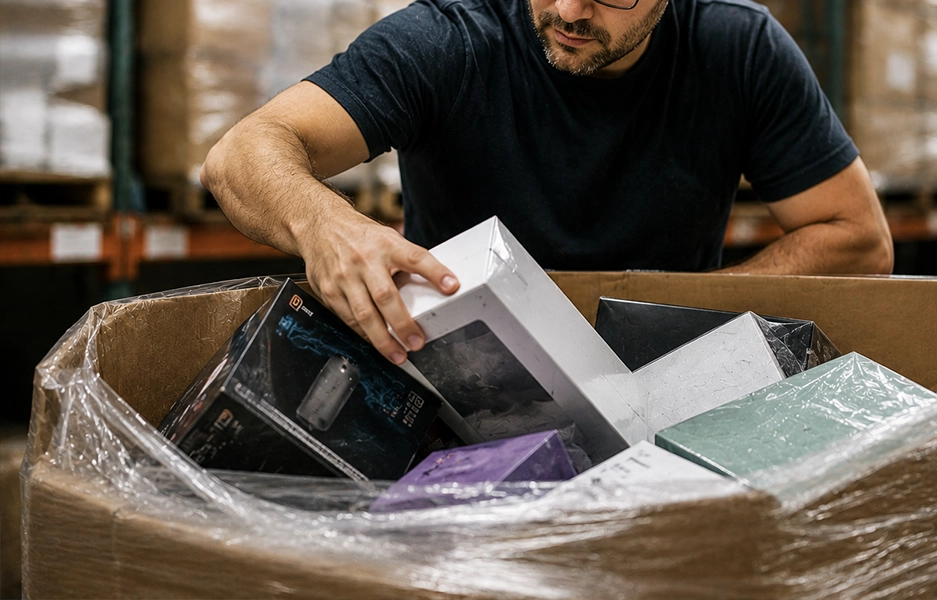
What Is a Liquidation Seller?
A liquidation seller is typically a third party who acquires inventory that brands, retailers, or distributors no longer want to hold. This inventory might be excess, discontinued, returned, open-box, or even salvage-grade goods. Sellers buy liquidation content in bulk, often by the pallet or truckload, and resell individual units on Amazon, eBay, Walmart Marketplace, and other platforms.
Understanding how unauthorized sellers get inventory is essential for any brand trying to protect its distribution channels. Many liquidation sellers operate legally under the First Sale Doctrine — but that doesn’t mean their activity is harmless to your brand. To understand whether it’s legal to resell products on Amazon, the answer is nuanced: it often is, but it creates real brand risk when products are misrepresented or sold in damaged condition.
How Do Liquidation Sellers Acquire Inventory?
The liquidation ecosystem has evolved dramatically in recent years, with multiple sourcing channels making it easier than ever for sellers to acquire large volumes of brand-name product at pennies on the dollar. Knowing how pallets end up on Amazon helps brands understand the full scope of the problem.
1. Online Liquidation Marketplaces
A wave of online providers have made it easier than ever for anyone — from large businesses to everyday entrepreneurs — to buy liquidation goods. The most prominent platforms include:
- liquidation.com: One of the largest and oldest online auction sites for liquidation goods, offering everything from consumer electronics to apparel and housewares. Sellers can buy by the case, pallet, or truckload — sourced from major retailers like Walmart, Target, Lowe’s, and more.
- B-Stock: B-Stock operates dozens of private-label marketplaces for big retailers (like Amazon, Best Buy, and Costco), connecting approved buyers with bulk returns and overstock inventory.
- 888Lots: 888Lots specializes in curated lots for Amazon resellers, complete with UPCs, condition reports, and even profit calculators that show estimated margins after Amazon fees. Many listings are tailored for FBA sellers and highlight “potential profit” for online resellers.
Other providers — like Direct Liquidation, Via Trading, and regional auction platforms — further expand access to bulk liquidation inventory. These channels are a primary driver of how products leak onto the grey market.
2. Retailer Returns and Overstocks
Amazon itself, along with major brick-and-mortar chains, generates massive quantities of customer returns every year. Rather than restocking or inspecting each item, retailers bundle these goods into pallets or truckloads and sell them to liquidators, who in turn resell to the public or to online sellers. This is a key pathway to product diversion — inventory that was never intended to re-enter the market ends up competing directly with your authorized channel.
3. Amazon Returns Stores and Bin Stores
A new retail trend: Amazon return stores (also called “bin stores” or “treasure hunt” stores) are found nationwide. These stores buy Amazon and big-box retailer returns in bulk, then sell them directly to the public at extremely low prices. Some shoppers are “regular people” seeking bargains — but many are resellers scanning barcodes, looking for products to flip on Amazon or eBay. This means even products returned for defects or damage can quickly end up back on the marketplace, sometimes listed as “new.” This is one reason why the paths from your supply chain to Amazon are so difficult to trace and control.
4. Manufacturer Closeouts and Store Liquidations
When brands discontinue SKUs or packaging, or when retailers close stores, excess inventory is cleared out to the highest bidder — typically a liquidator, who resells through auctions or direct sales online. Poor controls over this channel are a common source of distributor leakage and grey market diversion.
5. Reverse Logistics and Asset Recovery Firms
These specialists handle excess inventory and returns for brands and retailers, rapidly liquidating goods with little oversight over where the product eventually ends up. Without strict contractual controls — including provisions banning resale on Amazon — this channel can generate a steady stream of unauthorized sellers that damage your brand.
The Hidden Dangers: Used and Incomplete Items Sold as New
One of the most dangerous aspects of this system is that liquidation sellers — whether through oversight or intent — often list “used,” “open-box,” or incomplete products as “new” on Amazon. This creates direct competition with actual new inventory and destroys both price integrity and product integrity.
- Shoppers expecting new, flawless items might receive returns, damaged packaging, or missing accessories.
- Negative reviews, warranty issues, and return headaches all land on your brand — not the unauthorized seller.
- Price wars erupt as “used-as-new” inventory is sold for less, forcing authorized retailers and brands to match — or lose sales entirely.
This is why grey market supply chain investigation is a critical tool for brands: identifying where diverted inventory enters the market is the first step toward shutting it down. And without thorough seller investigation, it’s nearly impossible to hold the right parties accountable.
Why Is Liquidation Content So Attractive to Sellers?
The economics of liquidation are compelling for resellers, which is why the channel continues to grow despite its risks to brands:
- Low Cost, High Potential Margins: Liquidators buy at pennies on the dollar, so even a small markup can yield significant profit. Providers like 888Lots display profit calculators, showing Amazon sellers potential gains after all fees.
- E-Commerce Optimization: Some platforms pre-scan lots for Amazon eligibility and sales history, making it simple for new resellers to start online instantly.
- Constant Supply: With high e-commerce return rates and aggressive retail clearances, there is a never-ending flow of inventory.
For brands, this means removing unauthorized sellers on Amazon requires more than one-time action. It demands a systematic, ongoing approach — because as fast as one seller is removed, the supply chain can generate another.
What Can Brands Do?
Liquidation sellers aren’t going away, but brands can take concrete steps to limit their impact:
- Work with Trusted Liquidators: Prefer partners who commit not to resell on Amazon or require product destruction for goods not fit for resale.
- Track and Audit: Use serial and lot tracking to identify where inventory surfaces and spot repeat violators. A supply chain investigation can trace diverted inventory back to its source.
- Enforce MAP and Product Condition Policies: Be vigilant in monitoring for “used-as-new” listings and take swift enforcement action. MAP enforcement software can automate detection and response.
- Educate All Partners: Make your expectations for liquidation and end-of-life goods clear to every channel partner, retailer, and distributor. Combine this with a structured unauthorized seller removal program for maximum impact.
With clear policies, ongoing monitoring, and proactive response, brands can protect their reputation, pricing, and long-term value in a crowded, competitive online world.
Want to know where your liquidation goods end up — and how to protect your brand from unauthorized resellers exploiting the liquidation channel? Contact Brand Alignment for an audit and take back control of your supply chain.
Take control of your marketplace presence with fast, effective brand protection strategies.
Every day, unauthorized sellers and MAP violations can erode your pricing, reputation, and revenue. Don’t wait for problems to escalate, start enforcing your policies and reclaim your market authority with our proven tools and expert support.

 Brand Alignment