

Product diversion—the unauthorized sale of genuine goods outside intended channels—is a major challenge for brands, especially those selling through distributors and retailers. Diversion often leads to price erosion, loss of Buy Box control, unauthorized Amazon listings, and channel conflict.
Understanding the root causes is the first step to prevention.
1. Over-Distribution and Lack of Channel Control
When brands work with too many distributors, inventory is harder to track and control. Some distributors may quietly sell to unauthorized resellers or even directly to Amazon sellers—especially if agreements are vague or unenforced. This is why brands often compare selective distribution, exclusive distributors, and broader reseller models before expanding their channel.
2. Weak Sales Vetting and Onboarding
Inadequate vetting of new distributors or retailers is a top cause of diversion. Brands may onboard partners without:
- Proper background checks
- Reviewing account histories for red flags (like excessive or unusual orders)
- Ensuring understanding and agreement with MAP and marketplace policies
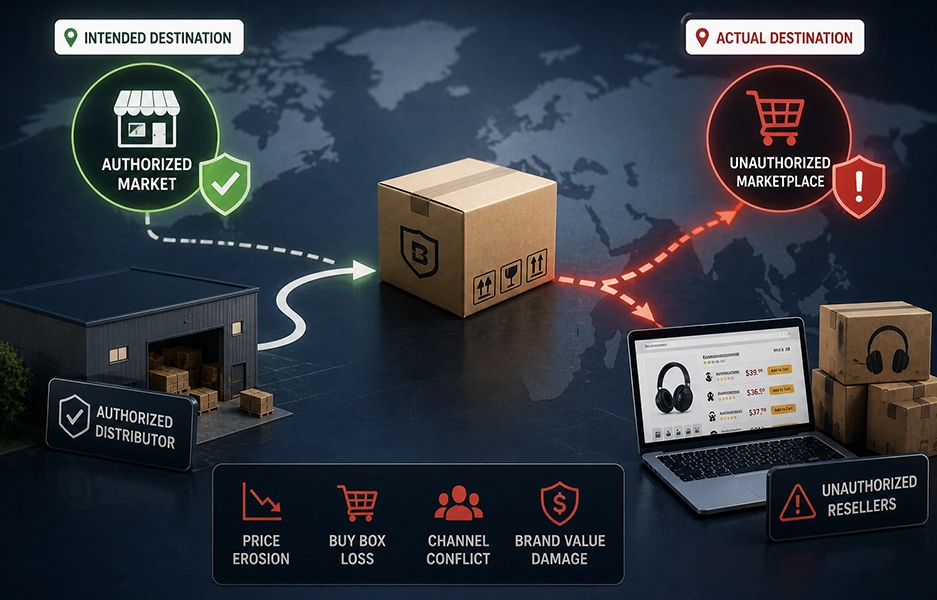
Strong vetting and ongoing monitoring at the onboarding stage is essential and should be part of every distribution strategy.
3. Inventory Liquidation or Closeouts
When authorized partners need to clear excess inventory—due to overbuying, returns, or discontinued products—they may sell in bulk to liquidators.
These liquidators often resell the product through unauthorized channels or to third-party Amazon sellers, fueling price erosion and gray market activity. Learn more about grey market risks and grey market diversion schemes.
4. Lack of Contract Clarity and Enforcement
Vague distribution agreements, unclear MAP policies, or unenforced rules invite diversion. If consequences aren’t clear and enforced, partners may take risks to move excess stock.
5. Gray Market and International Arbitrage
- Parallel Importing: Some resellers buy product in one country at a lower price and import it into higher-priced markets, bypassing authorized channels.
- Gray Market Sellers: These resellers find loopholes, discounts, or promotional opportunities and divert products for profit—often listing on Amazon or other marketplaces without authorization.
It is also important to distinguish diversion vs counterfeit, since diversion usually involves genuine products moving through unauthorized channels.
6. Employee or Internal Fraud
In rare cases, employees, warehouse staff, or business partners may divert inventory, selling goods out the “back door” to unauthorized sellers.
7. Poor Reporting and Inventory Tracking
Without serial numbers, batch tracking, or regular sales reporting, brands may lose sight of where their products end up—making diversion harder to detect and stop.
How to Prevent Product Diversion
1. Tighten Distributor Vetting and Onboarding
- Screen new partners, check for red flags, and require agreement to your marketplace/MAP policy.
2. Limit and Monitor Distribution
- Work with fewer, trusted partners; audit sales and spot-check orders for suspicious activity.
3. Strengthen Contracts and Enforce Consequences
- Make policies explicit, spell out penalties, and follow through when violations occur.
4. Implement Inventory Tracking
- Use serialization, lot codes, and frequent audits to track inventory from production to point of sale.
5. Act Quickly on Violations
- Investigate leaks, conduct test buys, and take action before diversion becomes widespread.
When diversion is already active, brands may need a grey market supply chain investigation, seller investigation, or structured process to remove unauthorized sellers.
Final Thought
Product diversion is almost always the result of weak distribution controls, poor partner vetting, and lack of contract enforcement.
Brands who take a proactive, disciplined approach to onboarding, monitoring, and enforcing agreements are best positioned to protect their pricing, their channels, and their marketplace reputation.
Take control of your marketplace presence with fast, effective brand protection strategies.
Every day, unauthorized sellers and MAP violations can erode your pricing, reputation, and revenue. Don’t wait for problems to escalate, start enforcing your policies and reclaim your market authority with our proven tools and expert support.




 Brand Alignment