

If you’re a brand owner, manufacturer, or exclusive distributor, seeing unfamiliar sellers suddenly appear on your Amazon listing can feel confusing—and sometimes alarming.
You may wonder:
“How are these sellers allowed to list my product without my permission?”
The answer lies in how Amazon’s marketplace is fundamentally designed.
Understanding Amazon’s shared listing model is critical if you want to protect your pricing, maintain Buy Box control, and reduce unauthorized seller activity.
How Amazon’s Shared Listing Model Works
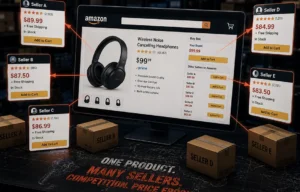
Amazon operates under a “one product, one listing” philosophy.
Every product is assigned a single ASIN (Amazon Standard Identification Number), and all sellers offering that same product compete on the same product page.
This means:
- The brand owner can sell on the listing
- Authorized retailers can sell on the listing
- Unauthorized sellers can also sell on the listing
- Even Amazon itself may compete on the same ASIN
If a seller can obtain inventory and match the product identifiers (UPC, EAN, model, packaging, etc.), Amazon generally allows them to list against the ASIN.
This is why many brands experience:
- Random sellers on my Amazon listing
- Sellers jumping on my listing
- Unexpected Buy Box competition
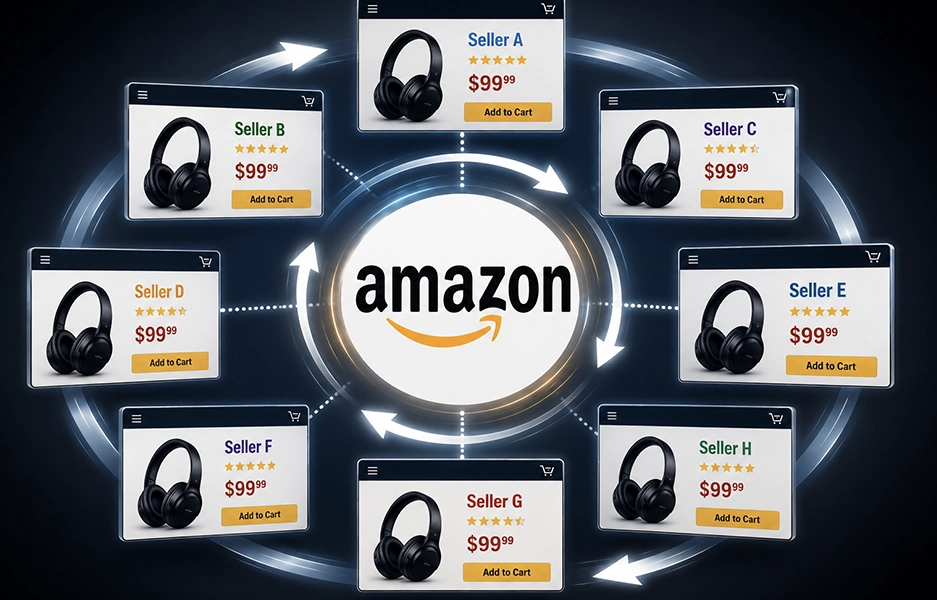
Why Does Amazon Allow Multiple Sellers?
Amazon believes the shared listing system improves the customer experience.
From Amazon’s perspective:
- More sellers create more competition
- More competition lowers prices
- Multiple sellers improve inventory availability
- Customers see one consolidated listing instead of duplicate pages
Unfortunately, what benefits Amazon’s marketplace often creates major challenges for brands.
Who Are These Other Sellers?
Authorized Retailers and Distributors
Sometimes your own wholesale or distribution partners begin selling on Amazon directly.
This is especially common when brands lack clear marketplace restrictions in their agreements.
See How to Stop Distributors from Selling Online.
Unauthorized Sellers
These sellers source inventory through:
- Grey market channels
- Retail arbitrage
- Distributor leakage
- Liquidation inventory
- International diversion
For a deeper breakdown, read Types of Unauthorized Sellers and Where Do Sellers Get Grey Market Products?.
You may also want to review How Do Resellers Get My Product?.
Amazon Retail
In some cases, Amazon itself becomes a competing seller on the ASIN.
Why Is This a Problem for Brands?
Buy Box Loss
The Amazon Buy Box rotates based on:
- Price
- Fulfillment speed
- Seller metrics
- Inventory availability
If another seller offers lower pricing or faster fulfillment, the brand itself can lose the Buy Box.
This often contributes to Amazon Buy Box suppression.
Many brands eventually require an Amazon Buy Box recovery strategy.
MAP Violations and Price Erosion
Unauthorized sellers frequently ignore pricing policies.
This creates downward pricing pressure and channel instability.
Brands often rely on:
Customer Confusion
Customers usually assume all sellers on the listing are approved by the brand.
If a rogue seller ships expired, damaged, incomplete, or counterfeit inventory, the brand—not the seller—typically receives the blame.
Channel Conflict
Retailers and distributors become frustrated when unauthorized sellers undercut pricing online.
This often damages long-term channel relationships.
Why Can Sellers List Without Your Approval?
Amazon does not require sellers to be authorized by the brand.
If a seller legally acquires inventory, Amazon generally permits them to list it.
Amazon usually only intervenes when:
- Counterfeiting exists
- Trademark or copyright infringement occurs
- Safety or regulatory violations are involved
- The ASIN becomes gated by Amazon
This is why many brands feel frustrated by how limited direct control can be.
What Causes So Many Sellers to Join Your Listing?
Distribution Leakage
Distributors or retailers may quietly divert inventory into Amazon channels.
Retail Arbitrage
Individuals buy discounted inventory from stores and resell online.
Liquidation and Overstock
Closeouts, returns, and liquidation inventory often feed unauthorized sellers.
Lack of Brand Gating
Unless your products are gated, Amazon allows most qualified sellers to join listings freely.
How to Regain More Control
1. Audit Your Supply Chain
Trace inventory movement from manufacturer to reseller.
Identify leakage points and suspicious reseller activity.
2. Update Distribution Agreements
Add:
- Amazon-specific restrictions
- Marketplace limitations
- Serialization requirements
- Online resale clauses
3. Monitor Pricing and Seller Activity
Real-time monitoring is critical.
Track:
- MAP violations
- New sellers
- Buy Box ownership
- Marketplace pricing changes
Most brands cannot manually monitor this consistently without automation.
4. Use Test Buys
Test buys help identify:
- Inventory sources
- Serial numbers
- Distributor leaks
- Counterfeit activity
This often becomes essential for removing unauthorized sellers on Amazon.
5. Consider Exclusive Bundles or SKUs
Custom bundles or Amazon-exclusive SKUs make it harder for unauthorized sellers to match your listings exactly.
Final Thoughts
Amazon’s shared listing model is not a mistake—it is the foundation of how the marketplace operates.
That means most brands will eventually face:
- Unauthorized sellers
- Listing sharing
- Buy Box competition
- MAP violations
- Channel conflict
However, brands that proactively manage their distribution, monitor marketplace activity, and enforce channel discipline can significantly reduce the chaos.
If your listings are constantly being shared by unauthorized sellers, Brand Alignment can help you investigate supply chain leakage, monitor seller activity, and regain control of your Amazon presence.
re customers can add items to their cart or make a purchase directly. It prominently displays a seller’s offer, making it the most desirable spot for driving sales. Not all sellers are able to win the Buy Box. Amazon uses a complicated algorithm to decide which seller gets it. Factors like price, seller performance, and fulfillment methods decide if you are eligible for it. For sellers, the Buy Box is often the first touchpoint with potential customers. That’s why it’s essential to understand how it works — and why winning it can make a big difference.Take control of your marketplace presence with fast, effective brand protection strategies.
Every day, unauthorized sellers and MAP violations can erode your pricing, reputation, and revenue. Don’t wait for problems to escalate, start enforcing your policies and reclaim your market authority with our proven tools and expert support.
 Brand Alignment