

Not sure if that Amazon email is real or a scam? You’re not alone — fake Amazon emails are among the most common phishing attacks online. Here’s how to tell them apart before you click anything.
Table of Contents
- What Are Amazon Return Pallets?
- Where Can You Actually Buy Amazon Return Pallets?
- What's Actually Inside a Return Pallet?
- The Real Risks of Buying Amazon Return Pallets
- Why Amazon Return Pallets Are So Popular
- Should You Buy an Amazon Return Pallet?
- For Brands: How Amazon Return Pallets Affect Your Marketplace
- How Brands Can Protect Themselves from Liquidation Resellers
Amazon is one of the world’s largest online retailers, and millions of people receive legitimate Amazon emails every day — order confirmations, delivery updates, refund notices, account changes, Prime renewals. Scammers know this. By impersonating Amazon, they exploit the trust and habits you’ve built as a customer, crafting fake emails designed to make you click before you think. This guide covers the most reliable ways to tell a genuine Amazon email from a phishing attempt — and what to do either way.
What Are Amazon Return Pallets?
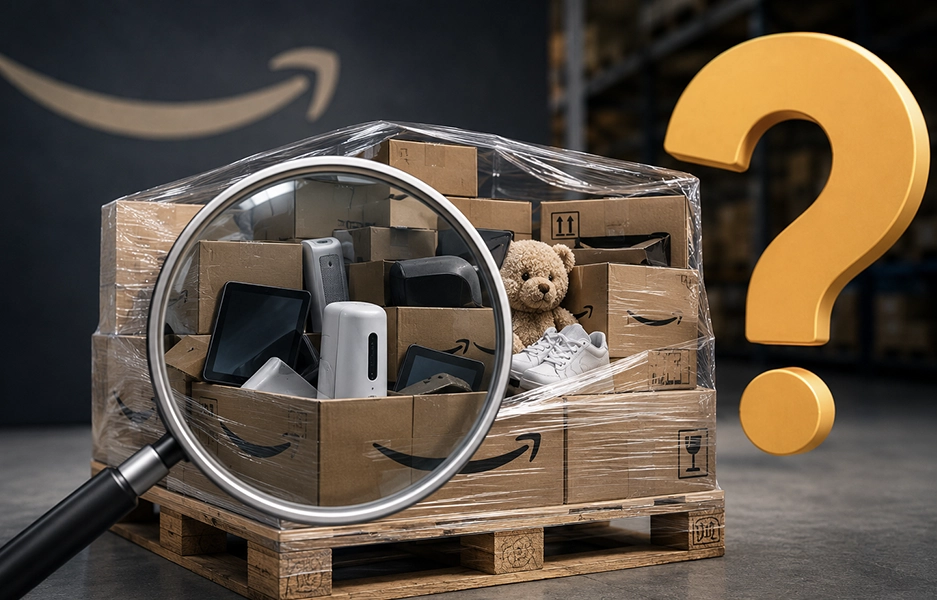
Amazon return pallets are bulk lots of merchandise that were originally sold through Amazon and subsequently returned by customers for various reasons — changed mind, wrong size, item didn’t match the description, defective product, or simply unwanted. These goods span virtually every product category: clothing, kitchen appliances, electronics, toys, tools, personal care products, and more.
When Amazon receives customer returns, it conducts a triage process. Items that are in new or like-new condition and meet Amazon’s standards may be resold as “Amazon Renewed” products. But a large portion of returns are not economically viable to inspect, repackage, and relist individually. For those items, liquidation is the practical solution — selling inventory in bulk at a steep discount to liquidators, wholesalers, and resellers rather than absorbing the cost of individual processing.
The result is the Amazon return pallet: a large container of mixed merchandise, sold as-is, at a fraction of the original retail value. Some pallets are “blind” — you don’t know exactly what’s inside until you open them. Others come with a manifest — an itemized list of the included products and their approximate retail value.
Where Can You Actually Buy Amazon Return Pallets?
Amazon return pallets are sold through several channels, ranging from Amazon’s own official liquidation platform to third-party auction sites and physical retail locations:
- B-Stock (Amazon’s official liquidation marketplace): This is Amazon’s B2B liquidation platform, where approved business buyers can bid on bulk lots of returns, overstock, and excess inventory directly from Amazon fulfillment warehouses. It’s the most direct and legitimate source.
- Liquidation.com: A large online auction platform where Amazon returns, shelf pulls, and closeout merchandise are available for bid or direct purchase. Lots range from individual pallets to full truckloads.
- 888lots.com: A reseller-focused platform that specializes in curated lots, often including Amazon returns and overstock complete with itemized manifests and value estimates.
- Bin stores and Amazon return retail locations: Physical retail stores across the US purchase truckloads of Amazon returns and sell items to the public directly — often for $1 to $7 per item with no manifest. These stores are sometimes called “bin stores” or “discount liquidation stores.”
It’s important to understand that these pallets have passed through Amazon’s supply chain before reaching liquidation. How pallets end up back on the Amazon marketplace from there — via resellers who relist purchased items — is a separate and significant brand protection issue.
What’s Actually Inside a Return Pallet?
The contents of an Amazon return pallet can vary dramatically depending on the source, category, and whether the lot is manifested or blind. Here’s what buyers realistically encounter:
- Brand new, unopened products: Rare, but possible. Sometimes items are returned immediately after purchase without being opened — these represent the highest-value finds.
- Open-box items that were tested and returned: Common. These items may function perfectly but have compromised packaging and may be missing accessories.
- Used or customer-damaged goods: Frequently included. Condition ranges from minor wear to significant damage that renders the item unsellable without repair.
- Incomplete sets: Products missing components, chargers, manuals, or accessories that were either lost by the original customer or separated during returns processing.
- Items that don’t match the description: Occasionally, pallets contain mislabeled goods or items that were misidentified during the returns intake process.
- High-value products: The presence of valuable electronics, appliances, or branded goods in some pallets drives the viral “treasure hunt” narrative — though these represent a small fraction of typical pallet contents.
The honest reality is that most return pallets contain a mix of low-to-mid-value items in varying conditions. The dramatic finds showcased in social media unboxing videos represent the best-case outcomes, not the average experience.
The Real Risks of Buying Amazon Return Pallets
Before purchasing Amazon return pallets, buyers should understand the genuine risks involved:
- Inconsistent quality with no guarantees: Even manifested pallets may contain missing, damaged, or misrepresented items. Condition descriptions are approximations, not warranties.
- Shipping costs add up fast: Pallets are large and heavy. Shipping costs can add $100 to $500 or more to your total investment, significantly affecting your margin calculation.
- Competition is increasing: As liquidation reselling has grown in popularity through social media exposure, the market has become more competitive. Profit margins that existed a few years ago have compressed as more buyers compete for the same lots.
- Resale complexity: Successfully reselling pallet contents requires time, storage space, knowledge of marketplace policies, and the ability to accurately assess and describe item conditions — which new resellers often underestimate.
- Policy compliance risk: Some buyers of Amazon return pallets attempt to relist returned items as new on Amazon — a practice that violates Amazon’s policies and can result in account suspension. Understanding what’s legal when reselling on Amazon is essential before getting started.
Why Amazon Return Pallets Are So Popular
The Amazon return pallet trend has exploded in popularity for several interconnected reasons:
- Low barrier to entry: Almost anyone can register on liquidation platforms, place a bid, and receive a pallet. There’s no specialized knowledge required to get started — though expertise significantly improves results.
- Potential for high rewards: Occasionally, buyers genuinely do score valuable items far below retail cost. These real-but-rare success stories fuel ongoing interest.
- Social media amplification: Viral unboxing videos create the perception that profitable pallet flipping is accessible and common. The dramatic finds get shared; the disappointing pallets rarely do.
- Entrepreneurial appeal: Return pallet flipping is positioned as a path to self-employment and income independence — a narrative that resonates broadly.
The gap between the social media narrative and the operational reality of liquidation reselling is significant. Understanding how unauthorized sellers acquire inventory — often through exactly these channels — helps both buyers and brands navigate the space more effectively.
Should You Buy an Amazon Return Pallet?
If you’re considering purchasing Amazon return pallets as a buyer or reseller, a few practical considerations will help set realistic expectations:
- Start with manifested lots rather than blind pallets — knowing what’s inside allows you to calculate realistic resale value before bidding.
- Research the specific product category carefully. Electronics and branded goods have higher resale value but also higher competition and more policy complexity than general merchandise.
- Factor in all costs — purchase price, shipping, storage, processing time, and platform fees — before committing to a lot.
- Verify the condition descriptions independently where possible. “Like new” in liquidation terminology often means something different than it would in a retail context.
- Understand Amazon’s policies around selling returned or used items before listing them. What’s safe for buyers on Amazon is directly connected to how resellers represent their inventory.
Amazon return pallets can be a legitimate and profitable business for well-prepared buyers — but they require research, realistic expectations, and operational discipline. They are not the easy money that viral videos suggest.
For Brands: How Amazon Return Pallets Affect Your Marketplace
For brands, the liquidation pipeline creates a set of marketplace problems that go beyond the individual buyer experience. When your returned products enter the secondary market through pallet sales, several brand protection risks emerge:
- Used goods relisted as new: Some resellers purchase return pallets and list open-box or used items as new on Amazon, violating platform policies and deceiving customers who receive products in worse condition than advertised. These customers blame the brand.
- Price erosion: Liquidated inventory priced at a fraction of retail creates downward pressure on authorized seller pricing. When customers find your brand on Amazon at dramatically reduced prices from secondary sellers, it undermines your MAP pricing strategy and authorized channel pricing.
- Brand reputation damage: Customers who receive damaged, incomplete, or poorly performing products from liquidation resellers rarely investigate the reseller — they leave negative reviews on your brand’s product listing.
- Supply chain visibility loss: Grey market supply chain issues often originate in liquidation channels. Products that should be removed from circulation find their way back into active sales channels through pallet resellers.
Understanding what product diversion means for your brand and how the liquidation channel contributes to it is a critical first step in building an effective brand protection strategy.
How Brands Can Protect Themselves from Liquidation Resellers
Proactive brand protection is the most effective defense against the marketplace risks created by Amazon return pallet resellers:
- Control your liquidation channels: Establish clear policies about how returned and excess inventory is liquidated. When possible, use destruction or charity donation rather than selling through open liquidation markets that may return inventory to Amazon.
- Monitor your listings continuously: Use Amazon MAP monitoring to detect pricing anomalies that indicate liquidation resellers have entered your listings.
- Conduct test buys: Test buy programs identify resellers listing used or damaged goods as new, giving you documentation to pursue policy violation reports or seller removal.
- Investigate seller origins: Seller investigation services can trace unauthorized inventory back to its source in your supply chain — including identifying which liquidation channels your products are flowing through.
- Remove unauthorized sellers swiftly: Unauthorized seller removal programs combined with grey market risk mitigation give brands the tools to address both the symptom and the source of the problem.
The liquidation market is a legitimate part of the broader commerce ecosystem — but for brands, it requires active management to prevent returned and excess inventory from becoming a source of ongoing marketplace damage.
Thank you for reading! Whether you’re a buyer exploring the Amazon return pallet market or a brand dealing with liquidated inventory appearing on your marketplace listings, understanding how the liquidation channel works is essential. If your brand is experiencing marketplace damage from return pallet resellers and needs a comprehensive protection strategy, Brand Alignment’s experts are here to help.
Take control of your marketplace presence with fast, effective brand protection strategies.
Every day, unauthorized sellers and MAP violations can erode your pricing, reputation, and revenue. Don’t wait for problems to escalate, start enforcing your policies and reclaim your market authority with our proven tools and expert support.


 Luis Amor