

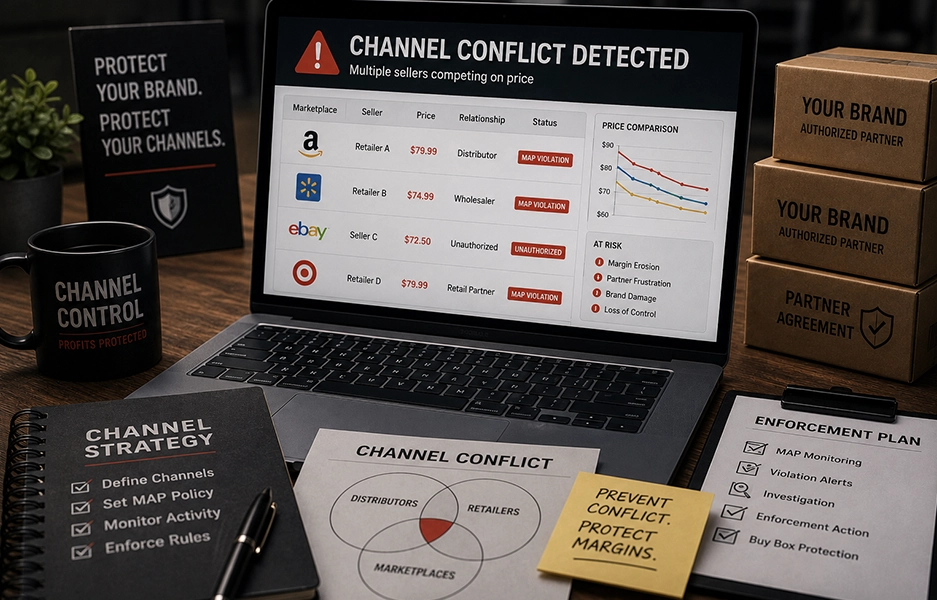
Channel conflict is one of the biggest threats to a brand’s profitability and reputation—especially in the age of Amazon and other online marketplaces. Channel conflict happens when your sales partners (distributors, retailers, wholesalers, or even direct-to-consumer operations) end up competing with each other, often on price, to win sales. If not managed, it can trigger price wars, retailer pushback, and long-term damage to your brand.
Why Does Channel Conflict Happen?
- Overlapping sales channels: Multiple partners selling the same product online or in the same geographic area.
- Lack of control or discipline: Weak agreements allow partners to sell wherever and however they want.
- No MAP policy or enforcement: Without a Minimum Advertised Price policy, there’s no brake on price erosion. Learn more about using MAP pricing and what MAP enforcement is.
- Online marketplace chaos: Platforms like Amazon, eBay, and Walmart make it easy for anyone to sell, often without your knowledge.
What’s at Risk?
- Margin erosion: Price wars shrink profits for you and your channel.
- Retailer and partner frustration: Good partners may leave if they can’t compete.
- Brand damage: Shoppers lose trust if your products are always discounted or appear in questionable online stores.
- Loss of control: You lose the ability to manage your brand, your pricing, and your customer experience.
How to Prevent Channel Conflict
1. Map Your Channel Strategy
- Clearly define which partners can sell where—online, offline, direct-to-consumer, or to specific regions.
2. Use Strong, Specific Agreements
- Contracts should spell out rights and restrictions about online and brick-and-mortar sales, as well as pricing policies and MAP requirements.
3. Monitor and Enforce
- Use MAP monitoring and unauthorized seller detection software to spot violations early. See what MAP monitoring software is.
- Enforce policies with real consequences for violators (warnings, reduced allocation, or account suspension).
For marketplace-specific enforcement, brands often combine Amazon MAP monitoring with Amazon MAP enforcement.
4. Limit Distribution Where Needed
- Sell only to trusted partners and restrict access to higher-risk channels.
- Consider exclusive SKUs or bundles for certain partners or channels.
5. Foster Communication
- Keep an open dialogue with your channel partners—address issues quickly and make it clear that a healthy, profitable channel benefits everyone.
Final Thoughts
Preventing channel conflict is about proactive strategy, clear communication, and relentless enforcement. Brands that manage their channels well enjoy higher margins, loyal partners, and a stronger reputation—both online and offline.
If Buy Box instability is already part of the problem, a structured Amazon Buy Box recovery program can help identify the causes and restore marketplace control.
Struggling with channel conflict? Brand Alignment’s team can help you regain control and build a winning strategy.
Take control of your marketplace presence with fast, effective brand protection strategies.
Every day, unauthorized sellers and MAP violations can erode your pricing, reputation, and revenue. Don’t wait for problems to escalate, start enforcing your policies and reclaim your market authority with our proven tools and expert support.



 Brand Alignment