

MAP enforcement is the process of ensuring that retailers comply with a manufacturer’s Minimum Advertised Price (MAP) policy across all advertising and sales channels.
It plays a critical role in maintaining fair competition, protecting brand value, and stabilizing online pricing by preventing unauthorized discounting and inconsistent product positioning across marketplaces.
Effective MAP enforcement allows brands to detect violations, validate pricing activity, and take corrective action against sellers who advertise below approved pricing thresholds.
To understand the foundation behind MAP pricing before enforcement, read here: What is MAP Pricing .
Table of Contents
- What Is MAP Enforcement?
- Why Is MAP Enforcement Important?
- How Is MAP Enforcement Typically Done?
- Verify Before You Act: Coupons and False Alerts
- How to Structure Seller Notices and Escalation
- How MAP Enforcement Affects the Amazon Buy Box
- MAP Enforcement vs. MAP Monitoring
- Legal & Practical Considerations
- Tips for Effective MAP Enforcement
- MAP Enforcement for the AI Era
- How to STOP MAP Violations
- Conclusion
What Is MAP Enforcement?
A Minimum Advertised Price (MAP) policy defines the lowest price at which authorized retailers may advertise a product. It doesn’t restrict what they actually sell it for — only how low they can publicly advertise.
MAP enforcement is the systematic process of:
- Monitoring product prices across e-commerce channels.
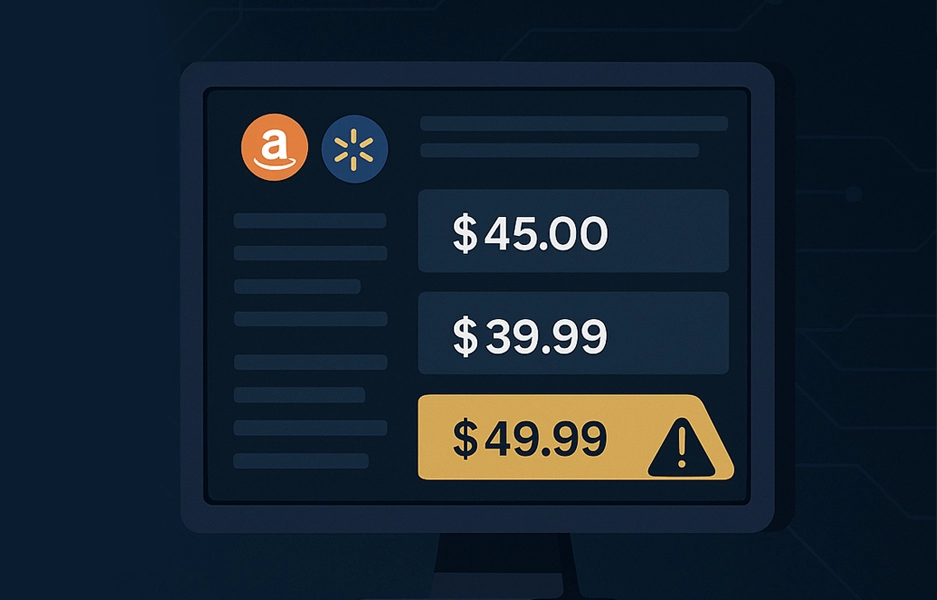
- Detecting violations (ads below the MAP threshold).
- Communicating with violators and documenting proof.
- Taking enforcement action — from warnings to suspending authorized status.
| Core Element | Description |
|---|---|
| Policy Definition | The manufacturer or brand sets minimum advertised prices for specific SKUs and channels. |
| Price Monitoring | Continuous tracking of advertised prices via MAP software or managed services. |
| Alert System | Automatic notifications flag MAP violations as soon as they are detected. |
| Enforcement | Brand contacts sellers with violation notices and escalates with repeat violators. |
Why Is MAP Enforcement Important?
MAP enforcement preserves both brand integrity and market stability. Without it, aggressive price-cutting and unauthorized reselling can damage perception and margins.
- Protects brand value: Prevents discounting that devalues premium products.
- Supports fair competition: Keeps authorized sellers profitable and motivated.
- Improves customer trust: Ensures consistent pricing across all channels.
- Prevents price wars: Stabilizes marketplace pricing for long-term sustainability.
“Price erosion happens quietly — MAP enforcement is how brands stop it before it spreads.”
How Is MAP Enforcement Typically Done?
1. Define a Clear Policy:
Specify which products, channels, and promotional types are covered.
2. Monitor Across Channels:
Use MAP software to track Amazon, Walmart, Target, and other marketplaces.
3. Detect Violations:
Capture screenshots, URLs, timestamps — key to fair enforcement.
4. Communicate & Escalate:
Send official notices; escalate repeat violations (e.g., reduce supply or terminate accounts).
5. Maintain Consistency:
A MAP policy only works if enforced evenly across all retailers.
Verify Before You Act: Coupons and False Alerts
Not every low price is a MAP violation. Before contacting a seller, confirm that:
- The listing matches the right SKU and the correct MAP price.
- The seller is publicly advertising below MAP, not only offering a lower price in the cart.
- The price drop was not caused by a marketplace-funded coupon or promotion.
- No repricing error or temporary system issue is involved.
Coupons deserve special attention. Amazon and Walmart sometimes apply platform-funded discounts that lower the visible price without any action from the seller. Treating those as violations damages relationships with compliant partners. Verification also protects you from making claims you cannot support. Learn more about avoiding false MAP alerts.
How to Structure Seller Notices and Escalation
Once a violation is verified, the seller receives a formal notice with the evidence attached. Most brands use a graduated structure:
- First notice: a professional message with the timestamped screenshot and a request to correct the price within a defined timeframe.
- Second notice: firmer language, a reference to your MAP policy, and a clear deadline.
- Final notice: the specific consequences that will follow if the price is not corrected.
Keep the tone firm and factual. Accusing a seller of counterfeiting or trademark infringement when the issue is pricing can create legal exposure. If an authorized seller still does not comply, escalate according to your policy, for example with a strike policy, paused allocation, or ending the relationship. Apply the same steps to every seller, or the policy stops being credible.
Some sellers below MAP are not your authorized partners at all, and a MAP notice gives you little leverage over them. Those cases need unauthorized seller removal instead.
How MAP Enforcement Affects the Amazon Buy Box
MAP compliance and Buy Box stability are closely connected. On Amazon:
- Sellers who undercut MAP can take Buy Box share from compliant sellers.
- Large price differences between sellers can lead to Buy Box suppression.
- Amazon Retail may match lower prices it finds on other websites, which can push your listing below MAP even when no third-party seller started it.
When the Buy Box is suppressed, shoppers see your listing but cannot add it to the cart with one click, and conversions drop. Restoring consistent pricing is often what brings the Buy Box back. See how the Amazon Buy Box works for the full picture.
MAP Enforcement vs. MAP Monitoring
Monitoring detects the problem. Enforcement fixes it. Many tools stop at alerts and dashboards, which tell you what is going wrong but leave the follow-up to your team. A complete MAP enforcement program adds seller communication, graduated escalation, compliance tracking, and documentation you can defend. MAP monitoring software finds the violations; MAP enforcement software makes sure they get corrected.
Legal & Practical Considerations
Is MAP pricing legal?
- United States & Canada: Generally legal, since MAP policies are unilateral (not negotiated price-fixing).
- European Union: Often not legal due to antitrust restrictions.
Key distinction:
MAP controls advertised prices, not actual selling prices. Retailers may sell below MAP if they don’t publicly advertise that lower price.

Brand Alignment Quick Tip
Always review MAP policies with legal counsel to ensure compliance with jurisdictional laws.
Tips for Effective MAP Enforcement
| Best Practice | Purpose |
|---|---|
| Clear Communication | Educate authorized sellers about the importance of MAP. |
| Technology Utilization | Use MAP enforcement software to detect violations automatically. |
| Regular Audits | Periodically review MAP performance and adjust rules. |
| Consistent Action | Ensure all violators face the same escalation steps. |
MAP Enforcement for the AI Era
AI-driven monitoring tools now detect price violations faster than ever. But automation alone isn’t enough. Quality control and manual verification remain critical to avoid false positives.
At Brand Alignment, our MAP enforcement system combines:
- Automated detection across global marketplaces.
- Manual verification to eliminate false alerts.
- Back-end quality control for every enforcement action.
- Client-first resolution — every alert is reviewed before action is taken.
This hybrid model ensures accuracy, fairness, and scalability. The hallmarks of effective brand protection today.
How to STOP MAP Violations
Conclusion
Are you looking to protect your pricing and reduce revenue lost to MAP violations? Brand Alignment helps brands monitor, verify, and enforce MAP across more than 200 marketplaces. Our MAP enforcement software combines automated detection with human review, and you can run enforcement yourself or let our team manage it through our managed MAP enforcement program.
Contact us, get in touch with us today and get a free quote or reach out to us on Linkedin.
Protect Your Brand With Proven MAP Enforcement
At Brand Alignment, we help brands monitor, validate, and enforce MAP policies with precision.
Detect unauthorized sellers / Maintain pricing integrity / Protect your reputation


 Brand Alignment