

Online prices don’t collapse by accident. There are 10 predictable forces — from unauthorized sellers and repricing algorithms to grey market imports and AI comparison tools — that drive price erosion on every major marketplace. Understanding these forces is the first step to stopping them.
Table of Contents
- Amazon Is an Open Marketplace by Design
- U.S. First Sale Doctrine Gives Sellers Legal Protection
- Amazon Won't Police Your Distribution for You
- Amazon Rewards Performance Metrics — Not Authorization
- Amazon Believes Competition Protects Consumers
- Amazon Can't Distinguish "Authorized" From "Unauthorized"
- Amazon Makes Money From Third-Party Sellers
- Unauthorized Sellers Exploit Weaknesses in Your Supply Chain
- What Brands Can Do About Unauthorized Sellers
In today’s retail landscape, not all inventory is created equal. Inventory grading — the classification of products as A-Stock, B-Stock, or C-Stock based on condition, packaging, and resale eligibility — has become a critical factor in pricing strategy, customer trust, and channel control. For brands managing MAP compliance and marketplace integrity, understanding these stock categories and controlling how they flow through your distribution network can mean the difference between market leadership and sustained margin erosion.
1. Amazon Is an Open Marketplace by Design
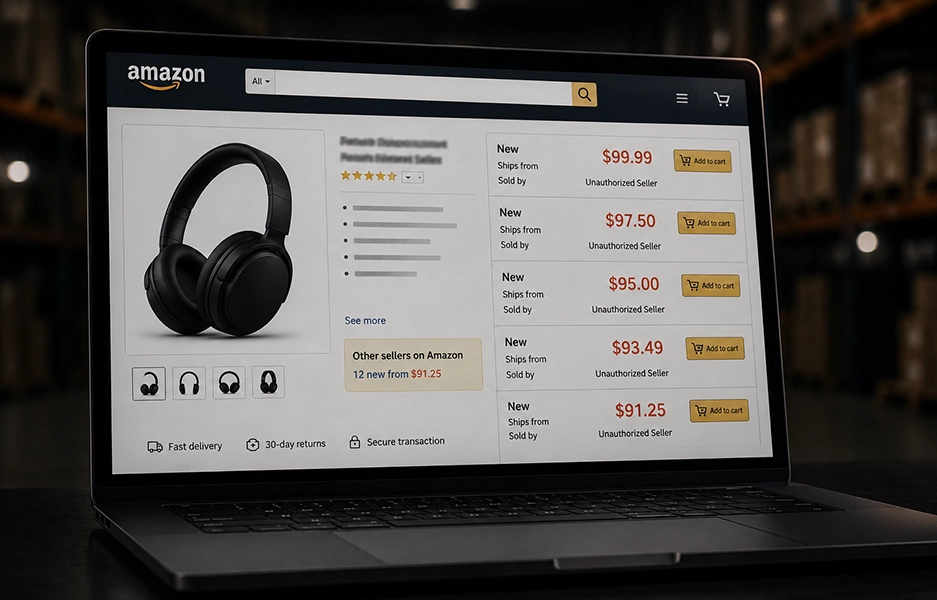
Amazon sees itself as a retail marketplace, not a controlled distribution channel. It intentionally allows anyone to create a seller account, list products they’ve legitimately purchased, and compete for the Buy Box based on performance and price. Amazon’s goal is to create the widest possible selection at the lowest possible price — and from Amazon’s perspective, multiple sellers (authorized or not) create more inventory, lower prices, and less risk of stockouts. This philosophy directly conflicts with how brands structure controlled distribution, MAP policies, or channel strategies.
2. U.S. First Sale Doctrine Gives Sellers Legal Protection
Under the First Sale Doctrine, once a person or company legally purchases a product, they have the right to resell it — even if they are not an authorized retailer, violate your MAP policy, or sourced inventory through grey market channels. Amazon generally refuses to intervene unless a product is counterfeit, materially differs from what the brand sells, or violates trademark, copyright, or documented safety concerns. Simply being “unauthorized” is not a violation of law — and not a violation of Amazon policy. This is why cease and desist letters must be carefully written with a legal basis such as infringement or material differences.
3. Amazon Won’t Police Your Distribution for You
Amazon explicitly places responsibility on brands — not Amazon — to manage distribution channels, authorized reseller lists, MAP policy enforcement, supply chain leaks, and pricing integrity. Amazon views itself as a neutral platform and does not get involved in commercial disputes, MAP disagreements, or distribution enforcement. Even when you report unauthorized sellers, Amazon often responds: “This seller is allowed to list your product as long as it is authentic.” This is consistent with Amazon’s philosophy and legal framework.
4. Amazon Rewards Sellers Who Meet Performance Metrics — Not Authorization
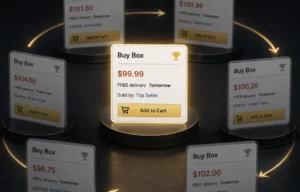
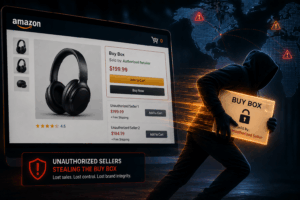
Unauthorized sellers often thrive because they understand how Amazon’s algorithm behaves. If they offer FBA or fast shipping, undercut your price, maintain good seller metrics, and keep products in stock — Amazon’s system rewards them with Buy Box visibility. Amazon does not prioritize authorized sellers. They prioritize price, shipping speed, reliability, and availability. This is why even a rogue reseller with six units can outrank a brand on its own listing.
5. Amazon Believes Competition Protects Consumers
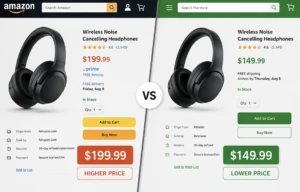
Internally, Amazon sees unauthorized sellers as beneficial to the customer experience. Multiple offers prevent price gouging, competition ensures fair pricing, and market forces — not brands — should set the price. Amazon’s mission is centered around consumer value, not brand control. If a reseller can sell your product for less, Amazon views that as a customer benefit. This mindset directly clashes with MAP strategy and long-term brand equity protection.
6. Amazon Cannot Distinguish “Authorized” From “Unauthorized”
Unless a product is Brand Gated, Amazon has no way to know which sellers are legitimate. Brand gating is not guaranteed, not clearly explained, not automatically granted, and often requires invoices, performance history, and proof of infringement. Even brands enrolled in Brand Registry are NOT automatically protected from unauthorized sellers — Brand Registry protects content, not distribution.
7. Amazon Makes Money From Third-Party Sellers
Amazon earns revenue from unauthorized sellers through referral fees, FBA fees, advertising, storage fees, and shipping fees. The more sellers competing on a listing, the more Amazon financially benefits. While Amazon does remove counterfeiters and clear violators, they have no financial incentive to police legitimate grey-market sellers who operate legally under U.S. law. The risks of unauthorized sellers fall entirely on the brand, not Amazon.
8. Unauthorized Sellers Exploit Weaknesses in Your Supply Chain
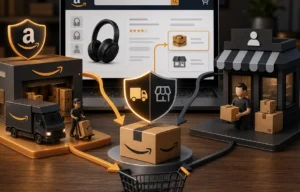
Amazon allows unauthorized sellers because your supply chain allows them too. Unauthorized sellers get inventory from distributors, retail partners, international channels, liquidation pallets, promotional arbitrage, and overproduction. Amazon only checks whether inventory is authentic, deliverable, and not a safety risk — not where the seller obtained it. If your inventory leaks through distributor leakage or other channels, Amazon will unknowingly empower whoever obtained it. This is why root-cause supply chain investigation is essential — enforcement alone is never enough.
What Brands Can Do About Unauthorized Sellers
Despite all the challenges, brands can regain control with the right strategy:
- Continuous marketplace monitoring. Track all sellers, prices, and inventory movements across Amazon and beyond.
- OSINT investigation and test buys. Identify who the seller is and where they’re sourcing product.
- Graduated enforcement. Use structured C&D sequences that escalate legally and professionally.
- Supply-chain leak elimination. Stop diverted inventory from entering the market in the first place.
- MAP enforcement. Reinforce pricing and incentivize authorized partners to stay compliant.
- Remove unauthorized sellers. Build a permanent defense against grey market sellers, not a temporary fix.
Brands that combine seller investigation, monitoring, enforcement, and leak prevention consistently achieve 95%+ unauthorized seller removal and restore Buy Box control. Amazon won’t restrict your listings — but you can restrict who has access to your product and enforce your channel strategy effectively.
Amazon will not solve your unauthorized seller problem — but brands that take a structured, proactive approach consistently do. If you’re seeing unauthorized sellers on your listings, Buy Box losses to unapproved resellers, or pricing erosion you can’t control, it’s time to build a real enforcement strategy.
At Brand Alignment, we help brands identify unauthorized sellers, investigate where diverted inventory is coming from, execute graduated enforcement programs, and fix the supply-chain vulnerabilities that allow grey market product to reach the marketplace. Our real-world results show that the right combination of monitoring, enforcement, and leak prevention consistently achieves 95%+ unauthorized seller removal.
Ready to remove unauthorized sellers and restore control of your Amazon listings? Contact us today to schedule a consultation.
Take control of your marketplace presence with fast, effective brand protection strategies.
Every day, unauthorized sellers and MAP violations can erode your pricing, reputation, and revenue. Don’t wait for problems to escalate, start enforcing your policies and reclaim your market authority with our proven tools and expert support.
 Brand Alignment