

Brands accustomed to enforcing Minimum Advertised Price (MAP) policies in the United States often encounter challenges when expanding their enforcement programs into Europe.
In the U.S., brands commonly monitor advertised prices, issue MAP violation notices, and restrict distribution to retailers that repeatedly violate their pricing policies.
However, the European Union operates under a fundamentally different competition law framework.
EU competition law generally prohibits agreements or coordinated practices that impose fixed or minimum resale prices on independent retailers.
This means that language commonly used in American MAP enforcement programs can create significant legal risks when directed toward European distributors and resellers.
For brands selling on Amazon.de, Amazon.fr, Amazon.it, Amazon.es, and other European marketplaces, understanding what not to say is essential.
The solution is not simply replacing the term “MAP” with different terminology. Brands must ensure their actual conduct complies with European competition law.
Table of Contents
- Why MAP Policies Are Problematic in Europe
- What Brands Must Avoid Saying to European Resellers
- Recommended Retail Prices Are Not the Same as MAP
- How Brands Can Protect Distribution in Europe Without MAP Enforcement
- Why Monitoring Prices Can Still Create Risk
- Common EU Competition Law Mistakes in Amazon Brand Protection
- What Should Brands Say Instead?
- Conclusion
Why MAP Policies Are Problematic in Europe
Under Article 101 of the Treaty on the Functioning of the European Union (TFEU), agreements that restrict competition can be prohibited.
Resale Price Maintenance (RPM), which involves imposing fixed or minimum resale prices on independent resellers, is generally treated as a serious restriction of competition.
The EU’s Vertical Block Exemption Regulation and accompanying Vertical Guidelines identify fixed or minimum resale price restrictions as hardcore restrictions.
Unlike the United States, where certain advertised-price policies may be structured lawfully, the EU generally does not provide the same flexibility for minimum advertised price restrictions.
A policy that prevents retailers from advertising below a particular price can indirectly restrict their ability to compete on price.
Consequently, brands should not assume that an American MAP policy can simply be applied to European marketplaces.
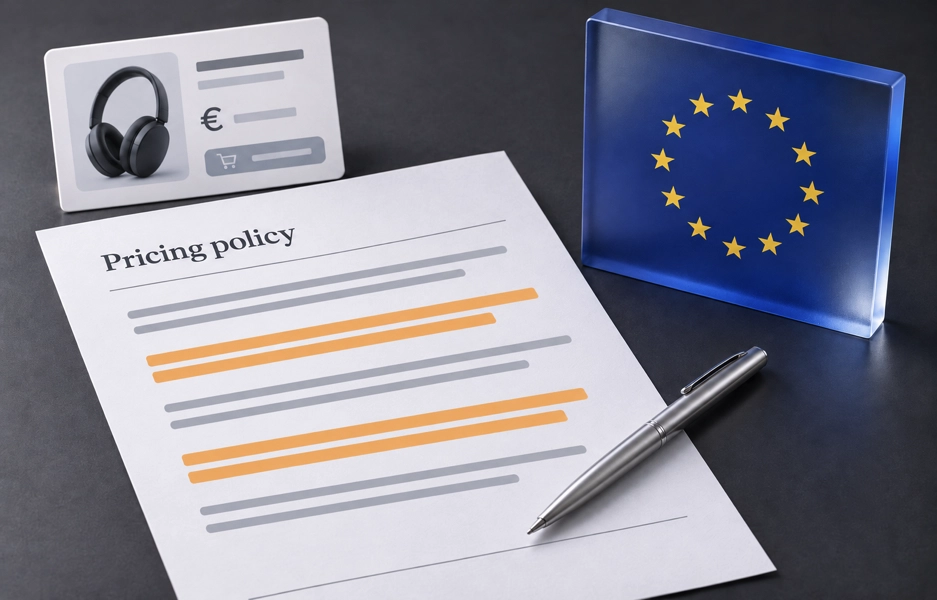
What Brands Must Avoid Saying to European Resellers
Many competition law problems begin with ordinary emails, distributor communications, or marketplace enforcement notices. The following examples illustrate language that brands should avoid.| Problematic statement | Why it creates risk |
|---|---|
| “You are violating our MAP policy.” | Attempts to apply minimum advertised pricing restrictions. |
| “Increase your Amazon price immediately.” | May constitute an attempt to impose a minimum resale price. |
| “We will stop supplying you unless you raise your prices.” | Connects distribution access to resale pricing. |
| “All authorized retailers must maintain our recommended price.” | Converts a recommendation into a potential obligation. |
| “We will remove discounting sellers to protect our retail partners.” | May indicate a coordinated effort to suppress price competition. |
| “Report retailers selling below our approved price.” | May facilitate monitoring and enforcement of resale price restrictions. |
Recommended Retail Prices Are Not the Same as MAP
European brands can generally communicate nonbinding recommended resale prices, subject to applicable competition law requirements. However, those recommendations must remain genuinely voluntary. For example, a manufacturer may publish a suggested retail price of €100. An independent retailer must generally remain free to sell the product for €90, €80, or another price of its choosing. The manufacturer should not punish the retailer for departing from the recommendation. Similarly, a recommended price should not become effectively mandatory through threats, pressure, financial incentives, or distributor intervention. The key distinction is whether the retailer genuinely retains freedom to determine its own resale price. Maximum resale prices may also be permissible in certain circumstances, provided they do not function as fixed or minimum prices.How Brands Can Protect Distribution in Europe Without MAP Enforcement
The absence of traditional MAP enforcement does not mean brands are powerless to manage European distribution. Instead, the strategy must shift away from controlling resale prices and toward legitimate distribution requirements.1. Establish Objective Authorized Reseller Standards
Brands may be able to establish selective distribution systems that require retailers to meet defined qualitative standards. Depending on the product and circumstances, these requirements might address product presentation, customer service, technical expertise, or appropriate storage and handling. For example, a premium electronics manufacturer may require authorized retailers to provide suitable customer support and accurate technical information. However, selective distribution systems must be structured carefully and comply with applicable EU competition law. Brands should not use seemingly neutral requirements as a disguise for excluding retailers that discount their products.2. Enforce Legitimate Distribution Agreements
Brands can establish contractual requirements governing authorized distribution relationships. These may include restrictions on sales to unauthorized distributors within a properly structured selective distribution system, subject to the applicable legal conditions. However, brands must distinguish between permitted distribution restrictions and prohibited limitations on cross-border or passive sales. A blanket prohibition against selling to customers in other EU countries can create competition law concerns. Distribution agreements should therefore be reviewed by qualified European competition counsel.3. Investigate Supply-Chain Leakage
One of the most effective alternatives to price-based enforcement is understanding where unauthorized inventory originates. Brands can use serial numbers, lot numbers, distributor records, and product traceability systems to investigate supply-chain diversion. For example, a manufacturer might discover that products intended for one distributor repeatedly appear through unexpected secondary channels. Rather than contacting resellers about their prices, the brand can investigate whether an authorized distributor has breached a lawful contractual obligation. Any corrective action should be based on legitimate distribution requirements, not an indirect attempt to punish discounting.Why Monitoring Prices Can Still Create Risk
Monitoring marketplace prices is not inherently unlawful. Brands may collect pricing information for market research, competitive analysis, or commercial planning. The risk increases when monitoring data is used to pressure independent resellers into maintaining minimum prices. For example, a brand might generate daily reports identifying retailers selling below its recommended price. If those reports are used to trigger warnings, distributor pressure, or supply restrictions, regulators may view the program as an RPM enforcement mechanism. The legal concern is not simply collecting pricing data. It is how that data is used. Brands should ensure that European marketplace monitoring programs have legitimate objectives and appropriate compliance controls.Common EU Competition Law Mistakes in Amazon Brand Protection
Several practices deserve particular attention.- Using U.S. MAP templates in Europe: Standard American warning letters may contain language incompatible with EU competition law.
- Pressuring distributors to stop supplying discounting retailers: Indirect enforcement through wholesalers can create the same concerns as direct pressure.
- Coordinating complaints from authorized retailers: A brand should not facilitate arrangements designed to suppress price competition.
- Using authorization status as a pretext: A distribution restriction should have a legitimate legal basis rather than serving as disguised price enforcement.
- Restricting cross-border sales without legal review: EU rules distinguish between active and passive sales, and permitted restrictions depend on the distribution structure.
What Should Brands Say Instead?
When communicating with European distributors and resellers, brands should focus on independently legitimate commercial concerns. Appropriate subjects may include product authenticity, warranty representations, storage requirements, product safety, traceability, and compliance with valid distribution agreements. For example, instead of demanding that a reseller raise its Amazon price, a brand might investigate whether products are being distributed through channels that fail applicable handling requirements. However, these concerns must be genuine and supported by evidence. Changing the wording of a pricing demand does not make the underlying conduct lawful.Conclusion
European brand protection requires a different strategy from traditional U.S. MAP enforcement. Brands should avoid imposing minimum advertised prices, threatening retailers over discounting, or using distributors to pressure sellers into maintaining particular resale prices. Instead, they should build legally compliant distribution structures, establish objective reseller standards, and investigate genuine supply-chain and product-compliance concerns.At Brand Alignment, we believe effective European marketplace protection begins with understanding distribution, identifying legitimate compliance issues, and addressing their underlying causes.
The goal is not to find alternative language for MAP enforcement. It is to build a brand protection strategy that does not depend on controlling independent retailers’ prices.
Take control of your marketplace presence with fast, effective brand protection strategies.
Every day, unauthorized sellers and MAP violations can erode your pricing, reputation, and revenue. Don’t wait for problems to escalate, start enforcing your policies and reclaim your market authority with our proven tools and expert support.
 Luis Amor