

A customer requests a repair, provides an Amazon receipt, and discovers their purchase does not qualify for your manufacturer’s warranty. Your support team now has two issues to investigate: the customer’s coverage and what the seller promised.
Warranty complaints can support marketplace enforcement when they document a genuine mismatch between an offer and the product or coverage delivered. However, a denied warranty is not automatically grounds for removing a seller. The case must connect verified evidence to an applicable Amazon policy.
This guide focuses on Amazon’s U.S. marketplace and provides general information, not legal advice. Have qualified counsel review warranty restrictions and proposed legal claims.
Table of Contents
- Can Brands File Warranty Complaints on Amazon?
- How Warranty Issues Trigger Amazon Policy Violations
- Make Warranty Terms Clear Before Enforcing Them
- How Brands Handle Warranty Complaints from Unauthorized Sellers
- How Brands File Warranty-Based Complaints Against Grey Market Sellers on Amazon
- Why We Caution Against Trademark Complaints for Material Differences
- Turn Warranty Complaints Into Better Distribution Control
Can Brands File Warranty Complaints on Amazon?
Yes—brands can report documented listing or condition violations involving warranty coverage. The important distinction is between reporting a customer-facing problem and asking Amazon to enforce your distribution preferences.
Amazon generally does not enforce exclusive distribution rights in the United States. Its rights-owner guidance also limits warranty claims within intellectual property reporting, evaluating them only alongside valid parallel-import claims in applicable markets. Unauthorized status alone is not a substitute for an actionable violation.
Keep the customer’s request for service separate from your report about the seller. Resolve coverage fairly while investigating whether the Amazon offer misrepresented what buyers would receive.
How Warranty Issues Trigger Amazon Policy Violations
Amazon’s general condition guidelines state that an item listed as New must retain its original manufacturer’s warranty, if one exists. Category-specific guidelines may override general requirements, so review the rules applicable to your product.
Consider a hypothetical product advertised as New with a two-year U.S. manufacturer’s warranty. Your records establish that the delivered unit was intended for another region and does not qualify under the applicable warranty terms. That discrepancy may support a “not as described” or incorrect-condition report.
Explain the missing benefit: access to manufacturer-backed repairs, replacement, or another advertised service. Do not merely write “materially different” and expect Amazon to infer the problem.
Also examine any seller-provided warranty. It is not automatically the manufacturer coverage advertised in the offer. Document who provides it and what it includes; do not assume either equivalence or inferiority.
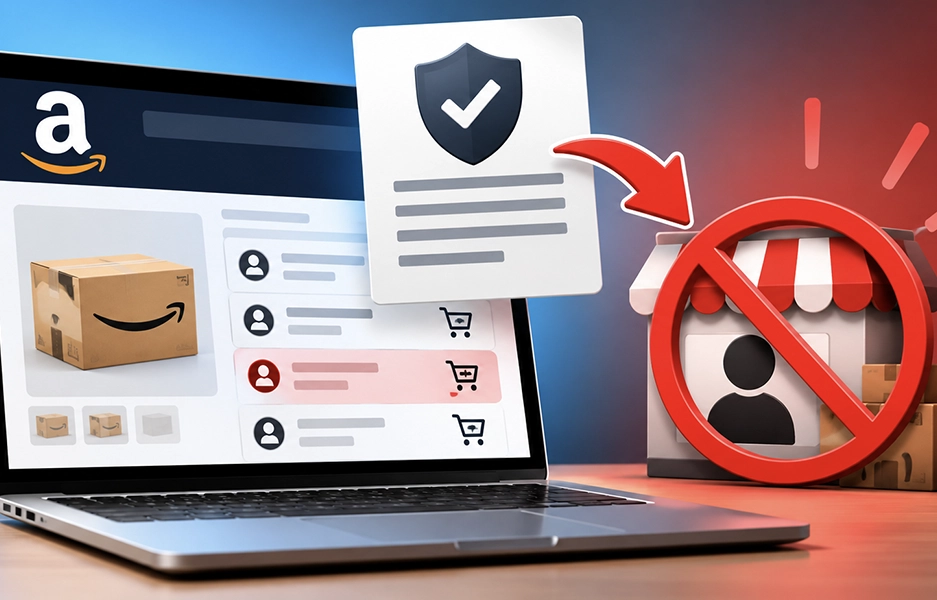
Make Warranty Terms Clear Before Enforcing Them
Your written warranty should accurately explain the coverage difference you intend to rely on.
Where legally permitted, that may include restricting domestic manufacturer coverage to eligible purchases from authorized sellers and excluding specified grey-market imports. Ask qualified warranty counsel whether those restrictions are appropriate and enforceable for your products and markets.
Simply adding “warranty void when purchased from an unauthorized seller” does not settle the legal question. Federal warranty requirements and applicable state-law protections still matter. FTC guidance emphasizes clear coverage disclosures and pre-sale availability for covered written warranties.
Publish consistent terms, preserve purchase-date versions, and document actual eligibility decisions. Do not retroactively withdraw coverage or invent exclusions to generate complaints.
A warranty should describe a real customer benefit—not manufacture a reason to remove a reseller.
How Brands Handle Warranty Complaints from Unauthorized Sellers
We recommend a shared intake process between customer service and brand protection.
Collect the receipt, Amazon order ID, ASIN, seller identity, purchase date, and serial or lot number. Preserve screenshots of the warranty representation and the customer’s explanation of what they expected.
Check whether the seller was authorized when the purchase occurred, whether the product matches the listed model, and which warranty terms applied. Review seller disclosures too, including any statement that only a seller warranty was provided.
Honor applicable obligations first. When denying manufacturer coverage, explain the specific clause and supporting facts, and provide a review route. Do not make assistance conditional on a customer submitting a negative review or seller complaint.
Where evidence is incomplete, consider a documented test purchase. Preserve the unit, packaging, labels, and purchase records, and confirm which seller fulfilled the order. Our supply-chain investigations use test buys and serial-number tracing to investigate product origins.
How Brands File Warranty-Based Complaints Against Grey Market Sellers on Amazon
Select the appropriate reporting category
For enrolled brands, Amazon’s Brand Registry reporting tool supports intellectual property, store-policy, and regulatory concerns. Seller Central also provides a Report Abuse process. Choose the category matching the documented issue—not an infringement category simply because it appears more forceful.
For a coverage mismatch, focus on applicable listing or condition requirements.
Submit a specific, evidence-backed explanation
Amazon requests identifying information, a concise policy-based explanation, and supporting documentation. Include the seller, ASIN, affected marketplace, order details, listing evidence, and relevant warranty terms.
An illustrative summary could read:
The seller’s offer described this product as New with a two-year manufacturer’s warranty. The attached purchase records and eligibility verification show that the delivered unit does not qualify for that coverage under the applicable terms. Please review this offer against the relevant condition and listing requirements.
Use that structure only when every statement is supported. Explain why coverage is unavailable rather than relying solely on the denial itself.
Request review, not guaranteed removal
Identify the affected seller offer rather than requesting removal of the entire shared product page when the evidence concerns only one seller.
Amazon determines what action is appropriate and may not disclose investigation results. A report is not a guarantee of permanent seller removal.
Retain the case history, address requests for evidence, and correct mistakes promptly. Do not replace missing proof with repeated complaints.
Why We Caution Against Trademark Complaints for Material Differences
Some providers pursue trademark complaints by arguing that missing warranty coverage makes otherwise authentic products materially different.
Courts have recognized that warranty and service differences can matter in trademark disputes. However, material differences do not automatically establish infringement: likely consumer confusion remains important, and adequate disclosures can affect the analysis.
A potentially arguable legal theory also does not override Amazon’s limits on warranty-based IP claims.
The risk of escalation is real. Sellers have brought defamation and business-interference claims over allegedly false Amazon trademark reports, and some claims have survived motions to dismiss. That permits litigation to proceed; it is not a final finding of liability.
Our recommendation is to have experienced IP counsel review the evidence, legal theory, and reporting rules before pursuing that route. Never describe an authentic product as counterfeit merely because manufacturer coverage is unavailable.
Turn Warranty Complaints Into Better Distribution Control
Use recurring complaints to investigate how unsupported products reach customers. Look for repeated seller identities, regional mismatches, and serial-number patterns—not simply opportunities to submit more reports.
At Brand Alignment, we help brands investigate sellers and trace product diversion through test buys, serial-number tracing, and supply-chain analysis.
The goal is accurate offers, fewer disappointed customers, and less unauthorized inventory reaching the marketplace.
Speak with our team about identifying the distribution issues behind recurring warranty complaints.
Take control of your marketplace presence with fast, effective brand protection strategies.
Every day, unauthorized sellers and MAP violations can erode your pricing, reputation, and revenue. Don’t wait for problems to escalate, start enforcing your policies and reclaim your market authority with our proven tools and expert support.


 Brand Alignment