
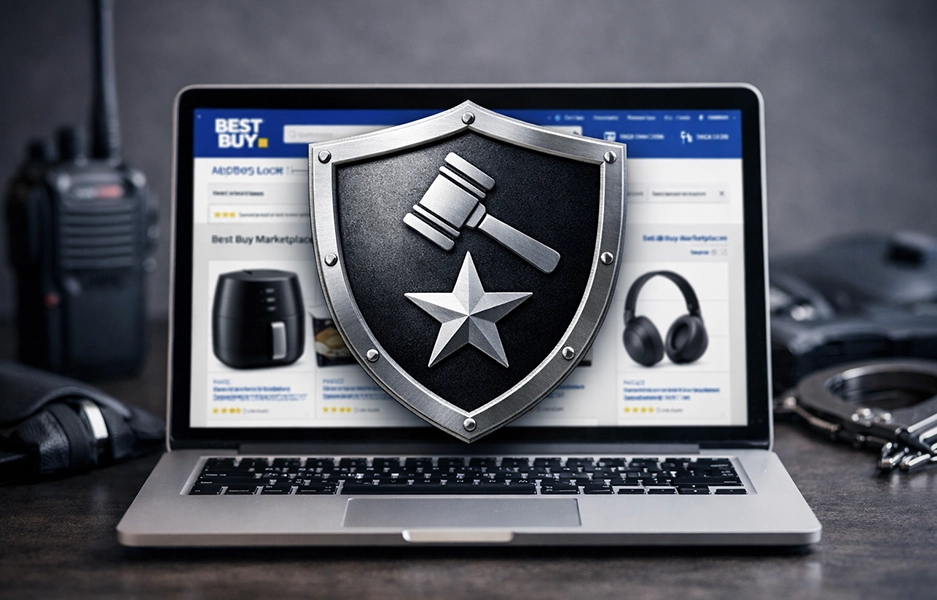
As Best Buy expands its third-party marketplace, brands are facing a familiar challenge in a new environment: unauthorized sellers, pricing disruption, and emerging counterfeit risk.
Unlike Amazon, where chaos is expected, or Target Plus, where control is tighter, Best Buy sits in a middle ground—growing fast, but still developing its enforcement structure.
For brands, that means one thing:
Marketplace control is your responsibility—not Best Buy’s
How Best Buy Marketplace Enforcement Actually Works
Best Buy’s role is primarily operational—not protective. They focus on:- Vetting sellers at a business level
- Ensuring fulfillment and customer experience
- Maintaining platform standards
- Verify brand authorization
- Enforce MAP policies
- Proactively remove unauthorized sellers
Why Unauthorized Sellers Appear on Best Buy
The platform isn’t the root cause—the supply chain is. Unauthorized sellers typically enter through:- Distributor leakage
- Retail or online arbitrage
- Liquidation and overstock channels
The Enforcement Challenge on Best Buy
Best Buy presents a unique mix of advantages and risks:Advantages
- Seller emails are often available
- Sellers are more “real” businesses (vs. anonymous accounts)
- Lower volume of sellers compared to Amazon
Risks
- Less strict vetting than Target Plus
- Limited built-in enforcement tools
- Early signs of counterfeit/knockoff listings
The Impact of Inaction
Even a few unauthorized sellers can trigger broader issues:MAP Breakdown
Unauthorized sellers:- Ignore pricing policies
- Undercut to win conversions
Counterfeit Exposure
With weaker controls:- Knockoffs can enter listings
- Customers blame the brand—not the seller
Channel Conflict
Authorized partners will:- Lose sales
- Question your enforcement
- Potentially stop complying with MAP
A Strategic Approach to Enforcement
Effective enforcement on Best Buy isn’t about quick takedowns—it’s about control and consistency.1. Identify and Validate the Threat
Start with clarity:- Is the seller unauthorized—or just unrecognized?
- Are they selling authentic or potentially counterfeit product?
- Conduct test buys
- Document everything
2. Use Direct Seller Communication First
This is one of Best Buy’s biggest advantages. Because seller emails are available:- Reach out directly
- Request proof of authorization
- Clarify your brand policy
3. Apply Graduated Enforcement
If initial outreach fails, escalate:- Informational notice
- Formal cease-and-desist
- Final escalation with stronger positioning
4. Investigate the Supply Chain
This is where long-term control is won or lost. Ask:- Where is the inventory coming from?
- Which distributor or partner is leaking product?
- New sellers will replace old ones
- Enforcement becomes endless
5. Monitor Continuously
Best Buy’s marketplace is evolving quickly. You need visibility into:- New sellers entering listings
- Price changes and MAP violations
- Patterns across marketplaces
6. Handle Counterfeits with Precision
If knockoffs are confirmed:- Use verified evidence (test buys, product comparison)
- Avoid filing unsupported claims
- Follow platform-specific reporting processes
Best Practices for Long-Term Control
Brands that succeed on Best Buy Marketplace focus on:Controlled Distribution
- Limit who can access inventory
- Strengthen distributor agreements
- Monitor unusual purchasing behavior
Consistent MAP Enforcement
- Align pricing across all channels
- Act quickly on violations
- Prevent price cascading early
Proactive Enforcement Strategy
- Don’t wait for complaints
- Identify issues early
- Address root causes—not just symptoms
Final Takeaway
Best Buy Marketplace is still maturing—but the risks are already here.- Unauthorized sellers are entering
- Knockoffs are being reported
- Pricing pressure is building
- Identify sellers
- Contact them directly
- Resolve issues efficiently
Thank you for reading our post, “How Target Marketplace Handles Unauthorized Resellers” We hope you found it helpful.
Start Protecting Your Brand Today
Take control of your marketplace presence with fast, effective brand protection strategies.
Every day, unauthorized sellers and MAP violations can erode your pricing, reputation, and revenue. Don’t wait for problems to escalate, start enforcing your policies and reclaim your market authority with our proven tools and expert support.


 Brand Alignment