

Walmart brand protection is the process of safeguarding a brand’s pricing, distribution, and marketplace presence across Walmart’s ecosystem.
In today’s Walmart Marketplace environment, brands face increasing risks from unauthorized sellers, gray market activity, and MAP violations that directly impact pricing stability and brand perception.
Without a structured Walmart brand protection strategy, brands lose control over how their products are priced and who is allowed to sell them.
Table of Contents
- What is Walmart brand protection?
- Why Walmart brand protection matters
- The relationship between brand protection and MAP enforcement
- The 3 pillars of Walmart brand protection
- Walmart brand protection workflow
- Authorized vs unauthorized sellers
- How Walmart brand protection failures happen
- Why manual brand protection fails
- Internet-wide leakage and Walmart brand protection
- Brand protection impact model
- Brand Alignment approach to Walmart brand protection
- Best practices for Walmart brand protection
- FAQ
What is Walmart brand protection?
Walmart brand protection refers to the set of strategies and systems used to:- Control authorized and unauthorized sellers
- Enforce MAP (Minimum Advertised Price) policies
- Monitor Walmart Marketplace pricing activity
- Prevent counterfeit or gray market listings
- Protect brand reputation and pricing integrity
Why Walmart brand protection matters
Strong Walmart brand protection ensures:- Consistent pricing across sellers
- Protection of profit margins
- Stability of Buy Box / Featured Offer
- Reduction of unauthorized reseller activity
- Long-term brand equity preservation
The relationship between brand protection and MAP enforcement
MAP enforcement is a core component of Walmart brand protection. While brand protection defines the system, MAP enforcement ensures pricing consistency within that system. MAP enforcement helps brands:- Detect pricing violations
- Maintain minimum advertised pricing
- Prevent discounting conflicts between sellers
- Ensure fair competition among authorized partners
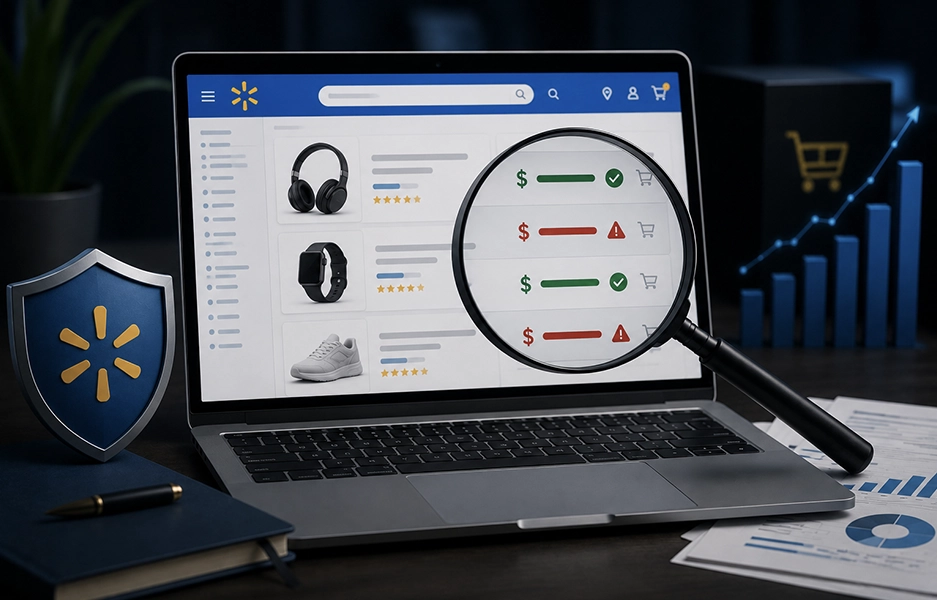
The 3 pillars of Walmart brand protection
A strong Walmart brand protection strategy is built on three core pillars:1. Policy Definition
Brands must establish clear rules that define:- Authorized seller requirements
- MAP pricing per SKU
- Distribution permissions
- Enforcement consequences
2. Marketplace Monitoring
Continuous monitoring is required to maintain visibility across Walmart listings. This includes:- SKU-level price tracking
- Seller identity classification
- Detection of unauthorized listings
- Identification of MAP violations
- Evidence capture for enforcement
3. Enforcement Execution
Once violations are detected, brands must enforce consistently:- Warning notices
- Escalation workflows
- Removal from authorized reseller programs
- Supply chain restrictions
- Formal compliance actions
Walmart brand protection workflow
| Step | Process |
|---|---|
| 1 | Policy Definition |
| 2 | Seller Mapping |
| 3 | Continuous Monitoring |
| 4 | Violation Detection |
| 5 | MAP Enforcement |
| 6 | Seller Correction or Removal |
Authorized vs unauthorized sellers in Walmart brand protection
Unauthorized sellers are the primary threat to Walmart brand protection systems.| Seller Type | Role | Brand Risk |
|---|---|---|
| Authorized Seller | Approved distribution partner | Low |
| Unauthorized Seller | Gray market reseller | High |
| Opportunistic Seller | Discounts without control | Critical |
How Walmart brand protection failures happen
Most failures are not intentional. They occur due to:- Lack of seller visibility
- Weak MAP enforcement systems
- Inventory leakage from distributors
- Marketplace repricing pressure
- Uncontrolled discounting strategies
Why manual brand protection fails
Manual processes fail because:- Walmart pricing changes frequently
- Multiple sellers compete per SKU
- Violations happen in real time
- Seller identity is not always visible
- Human tracking cannot scale
Internet-wide leakage and Walmart brand protection
Walmart is not an isolated system. Brand protection must account for:- External reseller channels
- Wholesale leakage
- Gray market distribution networks
- Cross-platform pricing inconsistencies
Brand protection impact model
| Stage | Without Protection | With Protection |
|---|---|---|
| Pricing | Unstable | Controlled |
| Sellers | Unregulated | Structured |
| Brand perception | Weak | Strong |
| Revenue consistency | Low | High |
Brand Alignment approach to Walmart brand protection
Brand Alignment provides a structured brand protection system that includes:- Walmart seller monitoring
- MAP enforcement and violation detection
- Unauthorized seller identification
- Gray market tracking and analysis
- Enforcement workflows (warnings → escalation → removal)
- Brand protection intelligence layer
Best practices for Walmart brand protection
A strong strategy should include:- Clear MAP policy definition per SKU
- Continuous Walmart marketplace monitoring
- Seller classification (authorized vs unauthorized)
- Automated violation detection systems
- Structured enforcement escalation
- Ongoing channel audits
FAQ
What is Walmart brand protection? It is the process of protecting pricing, sellers, and distribution integrity across Walmart Marketplace. How is MAP enforcement related to brand protection? MAP enforcement is one of the key mechanisms used to maintain pricing control within a brand protection system. Why is Walmart brand protection important? Because Walmart Marketplace allows multiple sellers per listing, increasing the risk of pricing erosion and unauthorized sales. What causes brand protection issues on Walmart? Unauthorized sellers, gray market leakage, and lack of monitoring systems.Walmart brand protection is a strategic system, not a one-time action.
Brands that fail to implement structured monitoring and MAP enforcement lose control over pricing, seller behavior, and marketplace consistency.
Brands that implement a unified protection system gain visibility, control, and long-term pricing stability across Walmart Marketplace. Contact Brand Alignment to build a protection strategy that works.
Take control of your marketplace presence with fast, effective brand protection strategies.
Every day, unauthorized sellers and MAP violations can erode your pricing, reputation, and revenue. Don’t wait for problems to escalate, start enforcing your policies and reclaim your market authority with our proven tools and expert support.


 Brand Alignment