You open your banking app. There it is: Pending – Amazon. But you didn’t just order anything. Now you’re wondering: Did I get hacked? Is Amazon charging me twice? Is this going to go through? Can I stop it?
Take a breath. A pending charge from Amazon is usually not a final charge. It’s a temporary authorization hold — and that distinction matters. Let’s break down what’s actually happening.
Table of Contents
- What a "Pending" Charge Really Means
- Why Amazon Places Pending Charges
- How Long Do Pending Amazon Charges Last?
- When Should You Be Concerned?
- How to Check If the Pending Charge Is Legitimate
- What If You Didn't Order Anything?
- Why Pending Charges Feel So Alarming
- Can You Cancel a Pending Amazon Charge?
- What About Duplicate Pending Charges?
- How to Prevent Future Panic
A pending charge from Amazon is almost always a temporary authorization hold — not a completed transaction. Amazon places these holds to verify your card before an order ships. Here’s exactly what each type of pending charge means and when you actually need to worry.
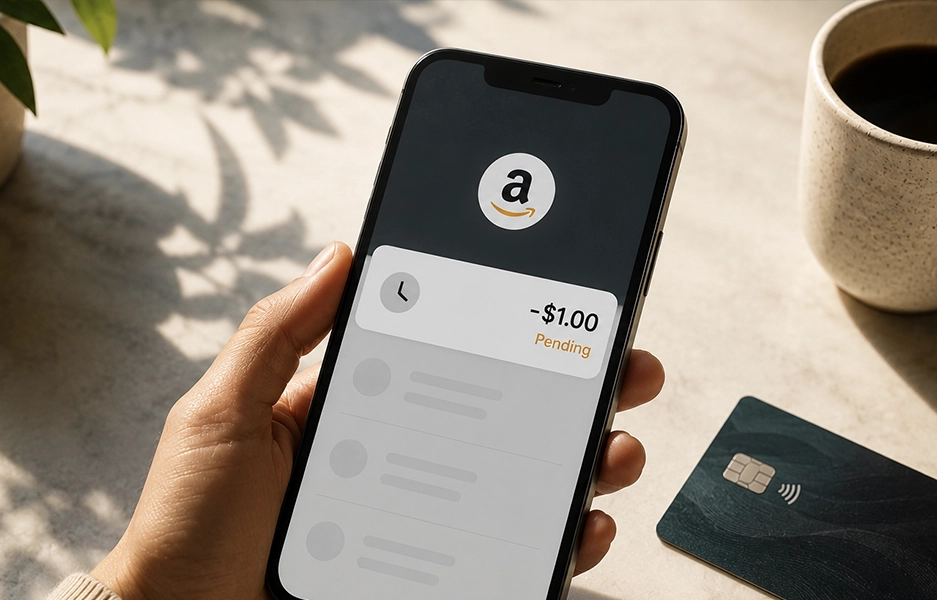
What a “Pending” Charge Really Means
When you place an order on Amazon, your bank doesn’t immediately transfer the money. Instead, Amazon requests authorization to confirm your card is valid, the funds are available, and the purchase can be completed. Your bank then places a temporary hold on that amount. That hold shows up as “pending.” It is not the final charge yet.Why Amazon Places Pending Charges
Amazon uses pending authorizations in several common situations.1. You Placed an Order That Hasn’t Shipped Yet
Amazon often authorizes your card when you place the order — but does not officially charge you until the item ships. If the item hasn’t shipped, the charge may sit as pending for a few days. Sometimes the pending charge disappears and then reappears as a completed charge later. That’s normal. This is similar to why you might see an Amazon charge but no order in your history.2. You Pre-Ordered Something
For pre-orders, Amazon may periodically authorize your card to ensure it’s still valid before the release date. These temporary holds can appear and disappear before the real charge posts.3. You Modified or Canceled an Order
If you changed shipping speed, updated your payment method, or canceled an order — you may see multiple pending authorizations. Usually, only one will finalize. The others fall off automatically.4. Split Shipments
If your order contains multiple items shipping separately, Amazon may authorize them separately. You might see one pending charge, then another, then they post individually. This is especially common during holidays.5. Amazon Re-Verified Your Payment Method
Sometimes Amazon re-checks your card if your bank flagged something, your card recently expired, or there was a previous payment issue. This can trigger a small temporary authorization — similar to the $1 Amazon charge that appears when verifying payment methods.How Long Do Pending Amazon Charges Last?
Most pending charges disappear within 1–3 business days, or convert into completed charges once items ship. In some cases, banks can take up to 5–7 business days to release a hold. Important: Amazon cannot manually remove a pending authorization. Only your bank controls when the hold drops off.When Should You Be Concerned?
A pending charge from Amazon is usually harmless. But pay attention if you see multiple large pending charges you don’t recognize, you didn’t place any recent Amazon orders, the amount doesn’t match your order history, or you receive security alerts about new logins. If none of your recent orders match the pending amount, that’s when you investigate further. For more red flags, check our guide on Amazon unusual activity emails.How to Check If the Pending Charge Is Legitimate
Follow this quick checklist: log into Amazon, go to Your Orders, match the pending charge amount to a recent purchase, and check if the item has shipped yet. If the item hasn’t shipped, that’s likely why it’s still pending. Also check: Account → Your Payments → Transactions — this will show whether Amazon finalized the charge or only authorized it.What If You Didn’t Order Anything?
If the pending charge doesn’t match any orders: check with family members who may use your account, review archived orders, and check other Amazon accounts you may have. Still nothing? Change your password immediately and enable Two-Step Verification. Then contact Amazon customer service to review recent activity. If Amazon confirms it wasn’t you, contact your bank to dispute the authorization. See our full guide on Amazon unauthorized purchases for complete next steps — or review what to do if your Amazon account was hacked.Why Pending Charges Feel So Alarming
Money showing as “on hold” feels like it’s already gone. But technically, it hasn’t moved yet. Think of it like a hotel placing a hold for incidentals — it’s temporary verification, not the final transaction. Most pending Amazon charges resolve on their own without any action required.Can You Cancel a Pending Amazon Charge?
Not directly. If the order hasn’t shipped yet, you can try canceling the order. If the cancellation is successful before shipping, the pending charge usually drops off within a few days. But once the item ships, the charge becomes final.What About Duplicate Pending Charges?
Sometimes you’ll see two pending charges for the same amount. Common reasons: you refreshed checkout, you updated your payment method, Amazon retried authorization, or your bank declined and reapproved the charge. In most cases, only one posts. The extra authorization falls off automatically.How to Prevent Future Panic
If you want fewer surprises: turn on order notifications, enable transaction alerts through your bank, avoid refreshing checkout pages repeatedly, and keep your payment methods updated. Knowing how pending authorizations work can save a lot of stress.Bottom Line
If you see a pending charge from Amazon, it usually means you placed an order, the item hasn’t shipped yet, Amazon is verifying your payment, and the charge hasn’t officially posted. Most pending charges disappear or convert into finalized charges within a few days. If the amount doesn’t match your orders, secure your account and contact support. But in most cases, it’s simply part of how online payment processing works — not fraud. And that means you can breathe a little easier.Unexpected charges create stress for consumers — and unauthorized sellers create the same stress for brands on Amazon. Brand Alignment helps brands identify and remove unauthorized resellers, enforce MAP pricing, and protect their marketplace revenue.
 Brand Alignment